
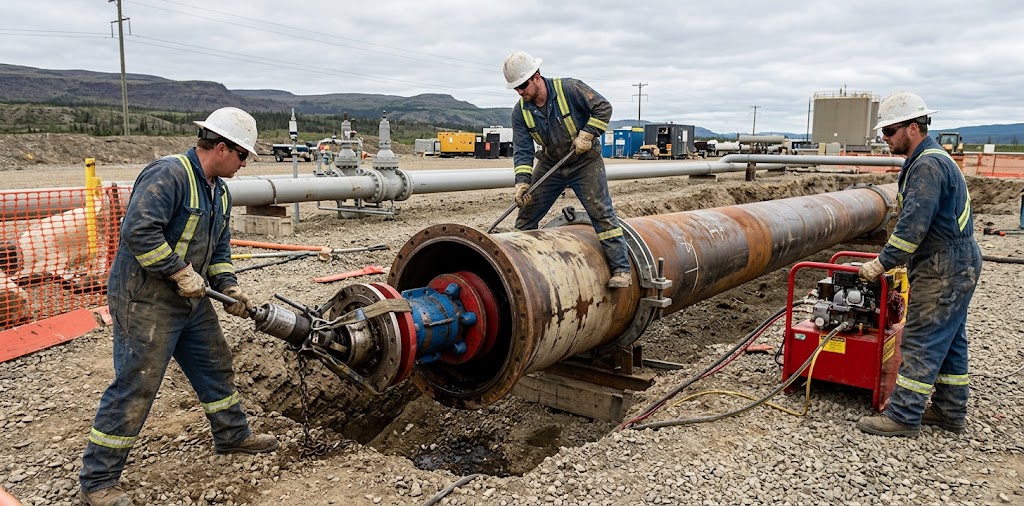
A pipeline pig that stops before reaching the receiver can restrict flow, delay operations, damage equipment, or create a complete blockage. Recovery becomes more complicated when the pipeline contains hazardous gas, chemicals, wastewater, or pressurized product.
Removing a stuck pig should never begin with an improvised pressure increase. Operators must first stabilize the system, confirm that the pig has stopped, locate it, identify the likely cause, and develop a pipeline-specific recovery plan.
What Does A Stuck Pipeline Pig Mean?
A pig is considered stuck when it has stopped moving and cannot reach the receiver under the planned operating conditions. Cleaning pigs, foam pigs, batching pigs, gauge pigs, and inline inspection tools can all become trapped.
A late pig is not necessarily stuck. Low driving pressure, conservative speed control, thick product, elevation changes, or heavy debris can cause slower movement than originally calculated.
Operators should compare the actual travel time with the planned run and review passage indicators, flow, pressure, and the last confirmed location. Beginning recovery before confirming the pig’s status can turn a manageable delay into a more serious incident.
Why Do Pipeline Pigs Get Stuck?
A pig may stop because it has lost its driving seal or encountered an obstruction that it cannot pass. Identifying which condition is more likely helps determine whether the tool should move forward, backward, or be physically retrieved.
Common causes include:
- Excessive debris accumulating in front of the pig
- Wax, scale, sediment, grease, or corrosion products
- A partially closed or unsuitable valve
- Tight bends or undocumented diameter changes
- An unbarred tee or internal fitting
- Weld intrusion, dents, buckles, or pipe deformation
- Incorrect pig diameter, hardness, or length
- Torn cups, discs, seals, or foam
- Insufficient flow or differential pressure
- Product bypassing an undersized or damaged pig
A pig that loses its seal may stop because the propelling fluid is passing around it. A pig facing a hard obstruction may remain sealed while pressure builds behind it. These situations require different recovery decisions.
Stabilize The Pipeline Before Recovery
The first response should focus on maintaining control. Unplanned valve movements, repeated pressure changes, or attempts to force the pig forward can compact debris, damage the tool, or expose the system to excessive pressure.
The control room, pipeline owner, operations team, and responsible engineers should be notified. Access around launchers, receivers, and the suspected pig location may also need to be restricted.
The recovery team should document:
- Current upstream and downstream pressure
- Flow rate and product movement
- Pig launch time and expected arrival
- Last confirmed passage point
- Valve and equipment configuration
- Pipeline contents and associated hazards
- Pig design, dimensions, and direction capability
- Applicable pressure and operating limits
No launcher, receiver, fitting, or pipeline section should be opened until the system has been properly isolated, drained or vented, and verified as free from hazardous stored energy.
Locate The Stuck Pig
Accurate location is essential before selecting a recovery method. The pig may be stopped at a bend, valve, branch, reduced opening, deposit plug, damaged section, or another internal restriction.
Pig signallers and passage indicators can narrow the search to the section between the last confirmed passage and the next checkpoint. A pig fitted with an electromagnetic transmitter may be located from the surface using a compatible receiver.
Acoustic equipment, geophones, pressure analysis, radiography, or other specialist methods may be required when conventional tracking is unavailable. The appropriate method depends on burial depth, pipe material, pipeline contents, terrain, and access.
Locating the pig also prevents unnecessary excavation. One accurate access point is considerably safer and less disruptive than opening the pipeline based on an uncertain position.
Assess The Likely Cause
Location data should be compared with pipeline drawings and the pig design. If the tool stopped beside a valve, tight bend, bore change, or branch, the internal geometry may be responsible.
A gradual loss of movement combined with changing differential pressure may suggest product bypass or seal damage. Rapidly rising upstream pressure with reduced downstream flow may indicate that the pig is sealed against a debris plug or physical restriction.
The recovered material from earlier runs can also provide useful evidence. Heavy wax, scale, corrosion debris, grease, or sediment may indicate that the pig has collected more material than the pipeline can transport safely.
Select A Controlled Recovery Method
There is no universal procedure for removing a stuck pig. The recovery method must match the pig design, suspected obstruction, pipeline contents, pressure limits, and available access.
Qualified operators and engineers may evaluate the following options.
Controlled Flow Or Pressure Adjustment
A carefully controlled change in flow or differential pressure may restore movement when the pig still has a suitable driving seal. Pressure must remain within the approved limits of the pipeline, valves, fittings, launcher, receiver, and pig.
Universal pressure increments should not be used. The correct operating envelope depends on the individual pipeline and its current condition.
Depressurization And Repressurization
Some flexible pigs can regain their original shape after pressure is removed. A pipeline-specific procedure may allow controlled depressurization followed by carefully managed repressurization.
Venting or draining can release gas, chemicals, wastewater, product, or hazardous vapors. Suitable containment, recovery, environmental controls, and ignition precautions must be established before this method is considered.
Reverse Flow
Reverse flow may return a bidirectional pig toward the launcher or another access point. The proposed direction must be compatible with the pig, pumps, compressors, check valves, pipeline connections, and downstream facilities.
Cup pigs and other unidirectional designs may not travel backward safely. Attempting reverse flow without confirming the pig design can damage the tool or wedge it more firmly.
Chemical Or Thermal Treatment
Approved chemicals, gels, hot fluids, or other treatments may soften wax, hydrate, grease, or compatible deposits around the pig. This approach requires confirmation that the treatment will not damage coatings, elastomers, metallurgy, downstream equipment, or the transported product.
Waste handling must also be planned. Dissolving or loosening the obstruction does not remove the need to manage the resulting material.
A Rescue Pig Or Soft Swab
A foam swab, gel pig, bypass rescue pig, or specially designed tool may be launched behind the stuck pig to restore sealing contact or push it beyond an obstruction.
This method carries a significant risk. If the rescue tool also stops, the pipeline may contain two trapped pigs and a more complete blockage. Tracking, engineering analysis, flow modelling, and a secondary recovery plan are therefore necessary.
Physical Pipeline Access
A hard obstruction, damaged fitting, collapsed pipe, or trapped inspection tool may require excavation and direct access. Possible methods include removing a spool, cutting out a section, using an existing access point, or performing an engineered hot tap.
Physical intervention should only begin after the pig has been accurately located and the section has been isolated, depressurized, drained, tested, and approved for opening. Repairs and return-to-service testing must be included in the plan.
Retrieve The Pig Safely
A receiver pressure gauge reading zero does not automatically prove that the barrel is safe to open. Pressure may remain trapped between valves, behind the pig, or inside connected equipment.
The team should verify the complete valve configuration, open approved bleed and drain points, confirm zero energy, manage liquids or gas, and establish a controlled closure area. Personnel should follow the owner’s written launcher and receiver procedure throughout retrieval.
Once removed, the pig should be inspected for torn seals, damaged cups, collapsed foam, missing components, wear, deformation, and embedded debris. Its condition often provides important evidence about why it stopped.
Investigate The Cause Before Another Run
Recovering the pig restores access, but it does not correct the original cause. Another pig should not enter the pipeline until the route and recovery findings have been reviewed.
The affected section may require gauging, camera inspection, nondestructive testing, valve servicing, deposit removal, or repair. Pressure and flow records should be preserved along with the exact location and condition of the recovered tool.
Future runs may need a different pig size, material, bypass arrangement, brush configuration, or cleaning sequence. The available types of pipeline pigging serve different cleaning, gauging, product handling, and inspection objectives.
How To Reduce Stuck Pig Risk
Prevention begins before the launcher is opened. The pipeline route, valves, bends, branches, fittings, bore changes, and historical modifications should be reviewed against the selected pig.
A safer pigging plan may include:
- Gauging the route before sending an inspection tool
- Starting with a softer or smaller cleaning pig
- Using progressive cleaning when deposit loading is uncertain
- Confirming every valve is in the required position
- Selecting the correct pig diameter, length, and flexibility
- Modelling pressure, flow, speed, and expected debris
- Installing or verifying tracking equipment
- Establishing recovery limits before launch
- Inspecting each pig before the next run
The appropriate approach depends on the system. A heavily fouled pipeline should not automatically receive the most aggressive pig first.
How Ice Pigging Reduces Permanent Entrapment Risk
Ice pigging uses a pumpable ice slurry instead of a rigid cleaning device. The slurry forms a flexible plug that contacts the internal pipe wall and carries loosened material toward a planned discharge point.
Because the slurry can alter its shape, it can pass through many bends, valves, fittings, and diameter changes that may present difficulties for conventional pigs. The comparison between ice pigging and conventional pigging explains how the two methods differ in wall contact, access, geometry, and recovery risk.
If slurry movement slows or stops, operators can pause and allow the ice to soften or melt. The remaining material can then be managed through an approved flushing or drainage plan, reducing the risk of permanent solid entrapment.
Ice pigging still requires route review, isolation, pressure planning, suitable access, discharge control, monitoring, and verification. It should not be assumed that ice slurry can retrieve an existing stuck mechanical pig, which requires a separate specialist recovery assessment.
The Ice Pigging™ team evaluates pipe dimensions, materials, bends, valves, access points, pressure, flow, deposits, discharge arrangements, and the required cleaning result before recommending the ice pigging process.
Frequently Asked Questions
How Do You Know If A Pipeline Pig Is Stuck?
A pig may be stuck when it misses its expected arrival, stops triggering passage indicators, shows no transmitter movement, and causes increasing upstream pressure or reduced downstream flow. These readings must be assessed together because operating conditions can also delay a pig.
Can Pressure Be Increased To Free A Stuck Pig?
A controlled pressure adjustment may move some pigs, but the system must remain within all approved operating and equipment limits. Uncontrolled pressure increases can damage the pig, pipeline, valves, launcher, or receiver.
Can Reverse Flow Remove A Stuck Pig?
Reverse flow may recover a bidirectional pig when the pipeline and connected equipment support reverse operation. It may not be appropriate for cup pigs, check-valve systems, or pipelines that cannot safely reverse product flow.
Can Another Pig Push Out The Stuck Pig?
A rescue pig may restore sealing force or push the first pig forward. It can also become trapped and create a double blockage, so the method requires specialist engineering, tracking, and a backup recovery plan.
When Is Excavation Required?
Excavation may be required when a pig is trapped by a hard obstruction, damaged pipeline section, collapsed fitting, or inaccessible valve. The pig should be accurately located before the pipeline is exposed or opened.
What Happens If An Ice Pig Stops Moving?
The ice slurry can soften and melt if movement stops. This melt-back characteristic reduces permanent entrapment risk, although the slurry and removed deposits must still be flushed or drained under a controlled plan.
Treat Stuck Pig Recovery As An Engineered Operation
A stuck pig is not simply a cleaning delay. Stored pressure, hazardous contents, damaged equipment, and an uncertain location can make rushed recovery attempts dangerous.
The correct sequence is to stabilize the line, confirm the pig has stopped, locate it, determine the likely cause, engineer the recovery, verify isolation, and inspect the pipeline before another run. Careful preparation and method selection remain the most effective ways to prevent the problem from happening again.