
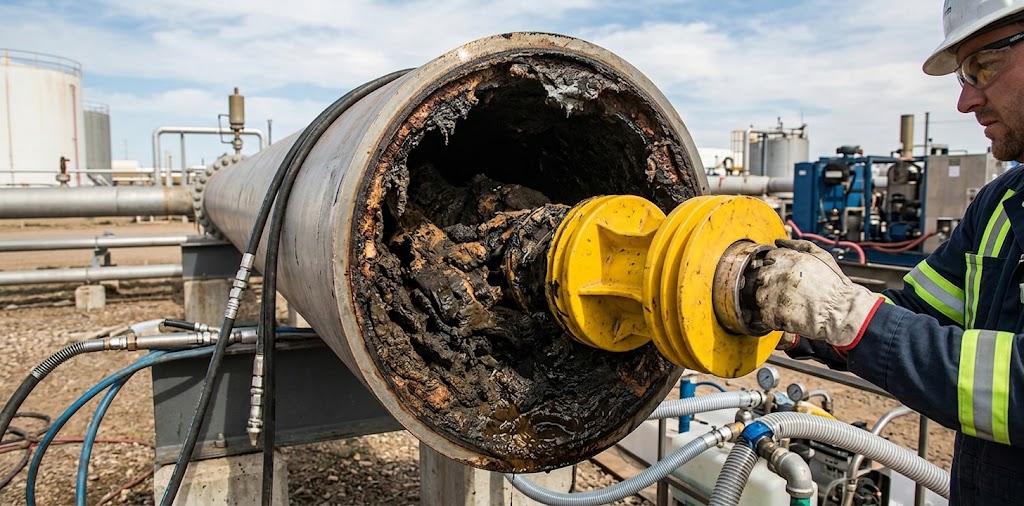
An unpiggable pipeline cannot safely accommodate a particular cleaning pig or inline inspection tool. The limitation may involve pipe design, condition, access, pressure, transported fluid, or the selected tool.
This does not necessarily mean the pipeline cannot be cleaned. A line that rejects a rigid pig may still suit a flexible tool, pumpable medium, or chemical treatment.
What Does Unpiggable Mean?
A conventional pig travels from a launcher to a receiver under controlled pressure. The route needs internal clearance, suitable bends and valves, adequate driving force, and reliable recovery.
Piggability is tool specific. A foam pig might navigate a route that cannot accommodate a longer inspection tool. The different types of pipeline pigging also have distinct access and passage requirements.
What Makes A Pipeline Unpiggable?
Design, condition, and operating factors can all prevent pig passage. Older systems often contain several limitations because they were not designed for routine pigging.
Missing Launch And Receiving Facilities
Most free traveling pigs require a suitable launcher and receiver. Lines without them need temporary connections, modifications, or a method that uses existing access.
Tight Or Closely Spaced Bends
Short radius, mitered, back-to-back, and closely spaced bends can stop a pig. A long or rigid device may bridge between bends, lose its seal, or become lodged.
Diameter Changes And Bore Restrictions
Reducers, schedule changes, repair sleeves, welds, linings, and undocumented alterations can restrict the bore. A large pig may become trapped, while a smaller tool may clean poorly.
Restrictive Valves, Tees And Fittings
Butterfly valves, reduced port valves, partially open valves, protruding instruments, and damaged fittings may block the route. An unbarred tee can also allow a flexible pig to enter a branch or become distorted.
Heavy Deposits Or Complete Blockages
Wax, scale, grease, sediment, corrosion debris, and tuberculation can narrow the bore. A pig may collect too much material, create a plug, or stop at the restriction.
A complete blockage differs from a dirty but passable pipe. Most flow driven methods require an open path, so the blockage may need to be located and opened first.
Insufficient Flow Or Unknown Pipe Condition
A free traveling pig needs controlled differential pressure. Low flow, high backpressure, elevation changes, unstable operating conditions, or an inability to reverse flow can make propulsion and recovery unreliable.
Advanced corrosion, damaged linings, displaced joints, and unreliable records create additional risks. Increasing pressure without identifying the restriction could damage the pipe or compact debris.
Can An Unpiggable Pipeline Be Made Piggable?
Some lines can be prepared through temporary launchers, full bore valves, barred tees, modified reducers, or shorter cleaning sections. Progressive cleaning can also begin with a softer or smaller tool before more aggressive equipment is introduced.
Every stage still needs debris controls and a recovery plan. The guide to removing a stuck pipeline pig explains why the response should be planned before a tool enters the line.
Cleaning Alternatives For Unpiggable Pipelines
The correct alternative depends on the deposit, pipe material, route, access, and required result.
Water Flushing
Flushing uses water flow to mobilize loose sediment and carry it toward a discharge point. It can be practical when adequate velocity, supply, drainage, and disposal capacity are available.
Water can follow the easiest flow path and leave attached deposits behind. Ice pigging and water flushing therefore produce different cleaning actions.
Ice Pigging
Ice pigging uses a pumpable mixture of ice crystals and liquid rather than a rigid device. The slurry behaves like a soft cleaning plug, conforming to many bends, fittings, valves, and diameter changes while contacting the pipe wall.
It may remove sediment, biofilm, grease, product residue, and loose corrosion material from suitable lines. If movement stops, the ice can melt, reducing the risk of leaving a rigid object permanently trapped inside the system.
Ice pigging still requires a viable route, suitable injection and discharge access, controlled pressure, isolation, and deposit recovery. It does not repair damaged pipe, measure wall thickness, pass through a complete blockage, or remove every form of hardened scale.
Chemical Cleaning
Selected chemicals can dissolve or soften compatible mineral scale, oxides, grease, wax, and process residue. The chemistry must match the pipe material, lining, seals, transported product, and connected equipment.
Hydro Jetting And Flexible Tools
Hydro jetting and mechanical tools can target harder deposits in accessible sections, but reach, bends, pipe condition, wastewater, and debris recovery impose limits. Foam pigs, gel systems, multidiameter tools, and tethered devices may also handle conditions that defeat a standard pig.
The broader comparison of industrial pipeline cleaning methods shows why no option suits every deposit or layout.
How To Select A Safe Cleaning Method
Selection should begin with a feasibility assessment rather than a preferred technology. The assessment must establish what needs to be removed, where it is located, and how the material will leave the pipeline.
Important project information includes:
- Pipe material, diameter, schedule, length, and internal condition
- Bends, valves, branches, reducers, instruments, and restrictions
- Deposit type, hardness, location, and estimated volume
- Available pressure, flow, isolation, and access points
- Discharge capacity, waste handling, and return requirements
How The Ice Pigging™ Team Assesses Complex Pipelines
The Ice Pigging™ team reviews each proposed route before recommending ice slurry. Drawings, field conditions, deposits, operating limits, access, isolation, discharge arrangements, and acceptance criteria all influence feasibility.
The ice pigging process can support suitable water, wastewater, cooling, food and beverage, and industrial pipe systems where rigid pigging is impractical. It is not a universal solution for collapsed pipes, complete blockages, severe structural defects, or deposits requiring more aggressive intervention.
Reporting may include discharge observations, recovered solids, flow, pressure, and return checks. Measuring cleaning results should connect this evidence to an agreed baseline and objective.
Frequently Asked Questions
Unpiggable lines vary widely, so these answers describe general principles. A pipeline specific review is required before introducing any cleaning tool or medium.
Can An Unpiggable Pipeline Still Be Cleaned?
Yes. Depending on the restriction and deposit, possible methods include ice slurry, flushing, chemicals, hydro jetting, flexible tools, or localized mechanical cleaning.
Does Ice Pigging Need A Launcher And Receiver?
Ice slurry does not normally require the large traps used for rigid pigs. It still needs suitable injection and discharge points, controlled pressure, isolation, and arrangements for collecting removed material.
Can Ice Pigging Clear A Completely Blocked Pipe?
No. Ice pigging needs a viable flow path. A complete blockage may require localized jetting, mechanical opening, excavation, repair, or replacement before slurry cleaning can be considered.
Can A Pig Pass Through Diameter Changes?
Some flexible or multidiameter pigs can handle controlled bore changes. The minimum opening, transition shape, tool design, and complete route must be verified before launch.
Does Cleaning Confirm Pipeline Integrity?
No. Cleaning removes compatible deposits and debris. It does not measure metal loss, confirm structural condition, or replace an appropriate integrity assessment.
Unpiggable Does Not Mean Unmanageable
An unpiggable designation identifies a limitation that must be understood. It does not prove that every cleaning option is unavailable or that forcing a conventional pig through the route is appropriate.
The safest plan identifies why the line is unpiggable, what must be removed, whether the restriction can be corrected, and which method can achieve the required result. Share pipeline drawings, operating data, deposit information, and access details to discuss a project specific feasibility review.