
- BENEFITS OF ICE PIGGING
Cleaner pipes, Less water and Lower Disruption
Ice pigging gives utilities, municipalities, and industrial operators a controlled way to clean pipelines from the inside. Dense ice slurry helps remove biofilm, sediment, scale, grease, and residue without excavation or rigid mechanical pigs.
Lower Water Use
Less water than flushing
No-Dig Cleaning
Clean from inside the pipe.
Shorter Downtime
Plan around operations.
Lower Stuck-Pig Risk
Ice can melt if flow stops.
- Why operators switch
Six benefits you can measure the day we leave site
Ice pigging is built for pipeline systems where cleaning performance, access, water use, and downtime all matter.
Radically less water
Reduces repeated flushing cycles.
No chemicals in the network
Uses physical ice slurry action.
Strong Internal Cleaning
Targets buildup on pipe walls..
No-Dig Access
Uses suitable existing access points.
Shorter Work Windows
Limits operational disruption.
Lower Stuck-Pig Risk
Ice can melt if movement stops.

- Operational upside
Fewer trucks, Shorter shutdowns and No repeat visits
Ice pigging helps operators clean pipelines with less surface disruption, fewer repeat visits, and a more controlled cleaning plan.
Single-shift turnaround
Most jobs are mobilised, cleaned and returned to service inside 8 hours. No overnight isolations.
Live telemetry from injection to discharge
Every clean is instrumented — pressure, flow and slurry position monitored so nothing is left to chance.
Works on the pipes you already have
DI, cast iron, HDPE, PVC, stainless, mild steel — from DN25 process lines to DN600 trunk mains.
Trained crew, standardised playbook
Same procedure, same reporting, same result whether we are on a brewery in Manchester or a trunk main in Riyadh.
- Environmental upside
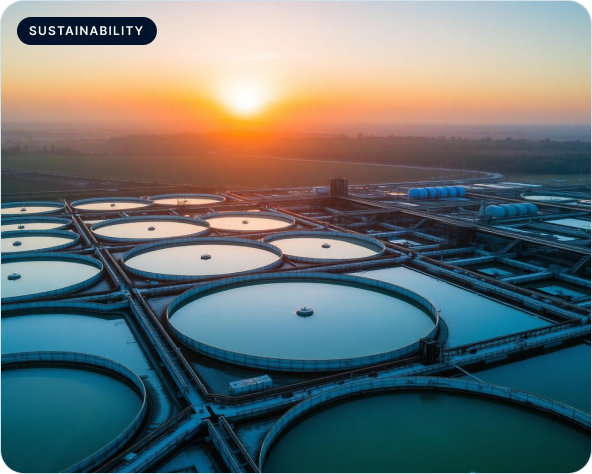
Lower Water Use And Easier Discharge Management
Water utilities are being asked to cut abstraction, cut chemical use and cut carbon; all at the same time. Ice pigging is one of the few interventions that moves every one of those numbers in the right direction.
Lower Water Demand
Reduce reliance on repeated flushing and large water volumes.
Less Discharge
Create a more controlled discharge stream for easier handling..
No Harsh Chemical Residue
Clean with ice slurry instead of aggressive chemical cleaning programs.
Less Surface Disruption
Limit unnecessary digging, traffic impact, and restoration work.
- COST DRIVERS
Where Ice Pigging Can Help Reduce Costs
Project costs depend on pipe size, length, access, buildup type, location, and discharge handling. Savings often come from less downtime, less water use, and reduced excavation.
- Less Repeat Flushing
Fewer cleaning attempts.
- Lower Downtime Costs
Shorter planned outages.
- Reduced Excavation
Less surface restoration.
- Better Flow
Reduce internal restrictions.
- Product Recovery
Recover usable material in some lines.
- Lower Disposal Costs
Reduced flushing and controlled discharge
Ask for the ROI worksheet — we’ll benchmark your last five flushing jobs against an ice pig equivalent.
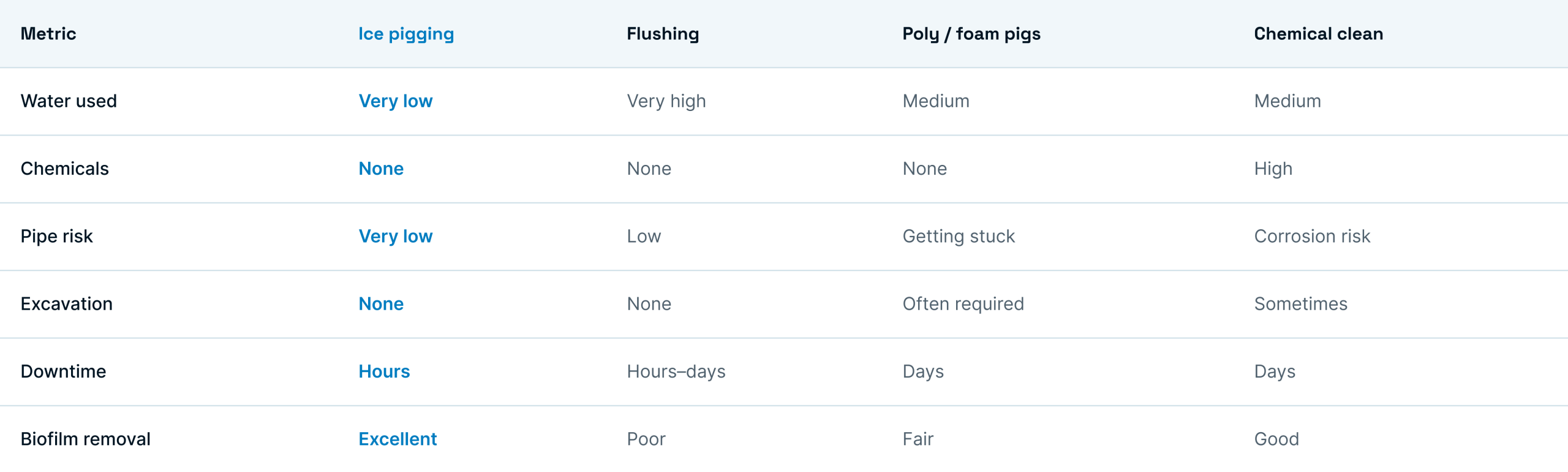
- Side by side
How the benefits stack against the alternatives
- Benefit by sector
What the upside looks like in your industry
Municipal Water
Reduce sediment, biofilm, and discoloration-causing buildup.
Industrial Process Lines
Improve changeovers and residue removal.
Food & Beverage
Reduce product loss and cleaning time.
District Heating & Cooling
Clear scale, sediment, and corrosion deposits.
- Common questions
What operators ask us about the benefits
How is the water saving actually verified?
Does the benefit last, or does the pipe re-foul quickly?
Are there any hidden costs I should account for?
Can you guarantee the improvement?
How quickly do we see operational benefits?
See If Ice Pigging Fits Your Pipeline
Share your pipe size, length, material, access points, project location, and buildup type. We’ll review the details and help determine whether ice pigging is a practical fit.