
Water Mains Cleaning With Ice Pigging
Remove sediment, biofilm, corrosion debris, and discolouration-causing deposits from drinking water mains cleaned in hours using hydrants already in the network, with no excavation required.
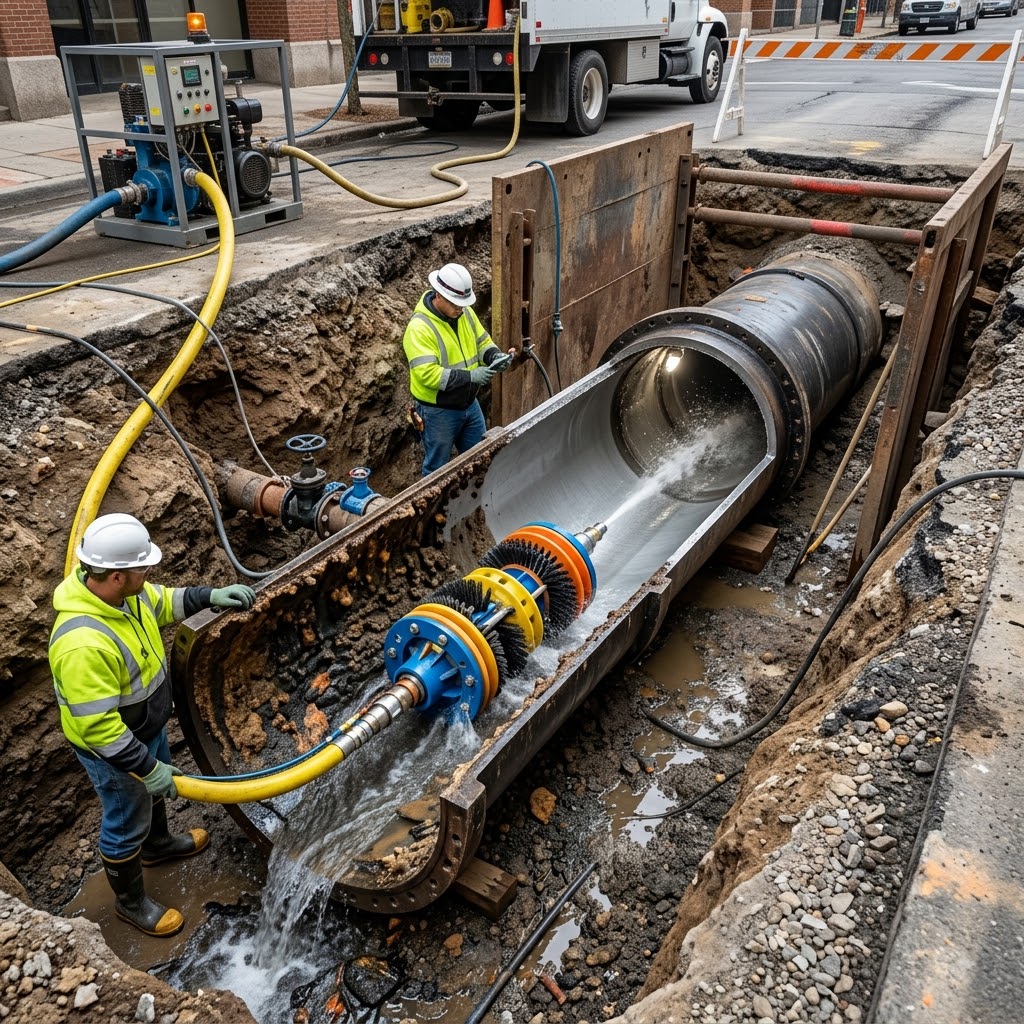
Specialized Cleaning For Drinking Water Mains
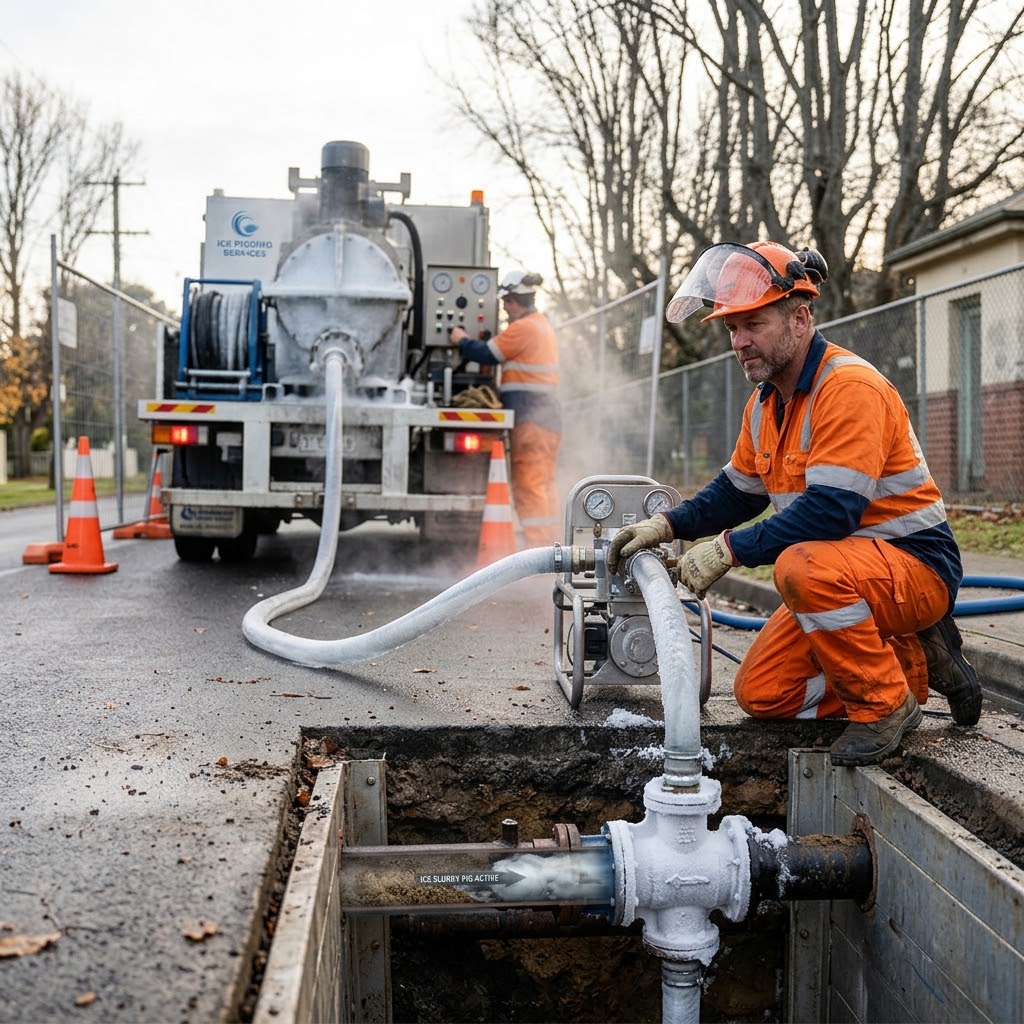
Ice pigging uses an engineered mixture of ice crystals and liquid to form a pumpable, semi-solid cleaning plug.
The slurry is injected through a hydrant or fitting, travels through the main under system pressure, scours the internal pipe wall, and carries loosened material out through a second hydrant or receiving point.
This physical cleaning method can complement unidirectional flushing, filtration, corrosion control, and existing water quality programmes.
It does not replace ongoing network water quality management, but it can remove deposits and biofilm that flushing alone often cannot fully dislodge.
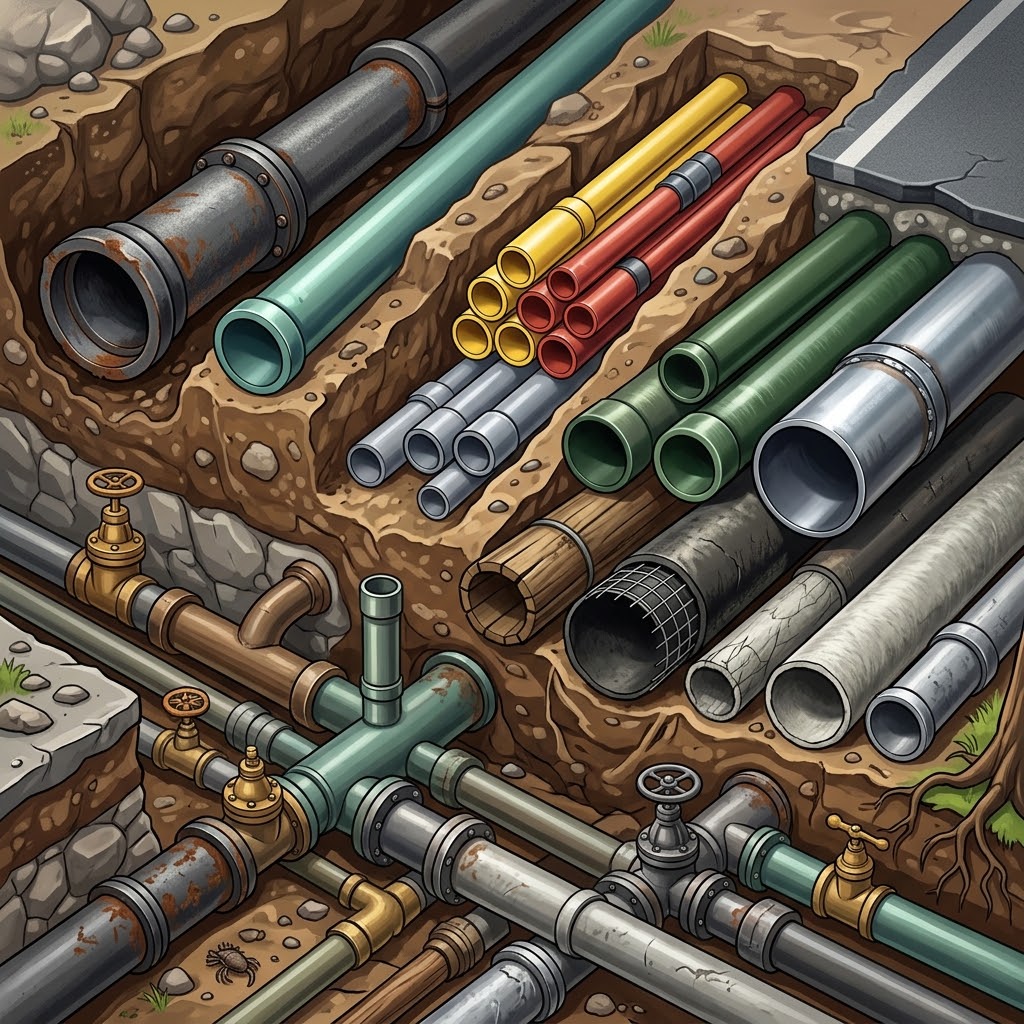
Water Main Types We Can Assess
Distribution networks vary by material, diameter, and layout. We assess pipe material, diameter, length, hydrant spacing, valving, and cleaning objectives before recommending ice pigging.
Trunk Mains
Clean several kilometres of large-diameter supply main in a single overnight operation.
Distribution Mains
Clear sediment, biofilm, and discolouration-causing deposits from street-level distribution pipework in minutes per section.
Rising and Reverse-Flow Mains
Pre-clean mains before they are switched to reverse flow, reducing the risk of customer discolouration complaints.
Dead-End and Low-Flow Sections
Remove stagnant deposits and biofilm from sections prone to poor circulation and repeated flushing.
New and Rehabilitated Mains
Clear construction debris, jointing compound, and commissioning residue before a new or relined main enters supply.
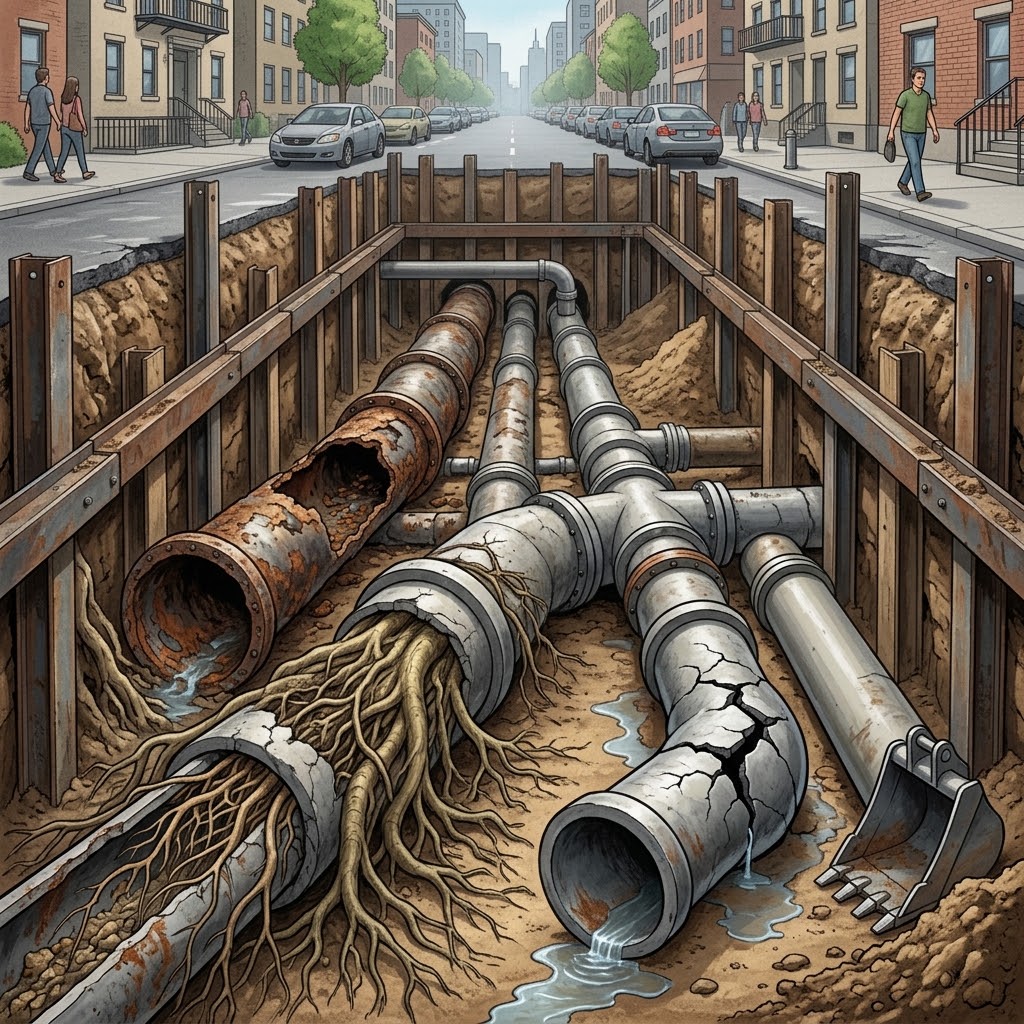
Common Water Mains Problems
Distribution pipework can collect contaminants during construction, from treatment plant sediment carryover, and through years of operation. Ice pigging can remove several forms of buildup from suitable mains.
Biofilm And Microbial Buildup
Warm weather, low flow, and long residence times can allow biofilm to develop along internal pipe walls, contributing to taste and odour complaints.
Sediment And Corrosion Debris
Iron, manganese, and corrosion products can settle in low-flow sections and resuspend as discoloured water whenever flow or pressure changes.
Construction And Commissioning Debris
Jointing compound, fabrication residue, dust, and pipe scale can remain inside newly laid or relined mains before they enter service.
Loose Scale And Mineral Deposits
Changes in water chemistry and flow velocity can loosen scale and mineral deposits that restrict the pipe and reduce water quality.
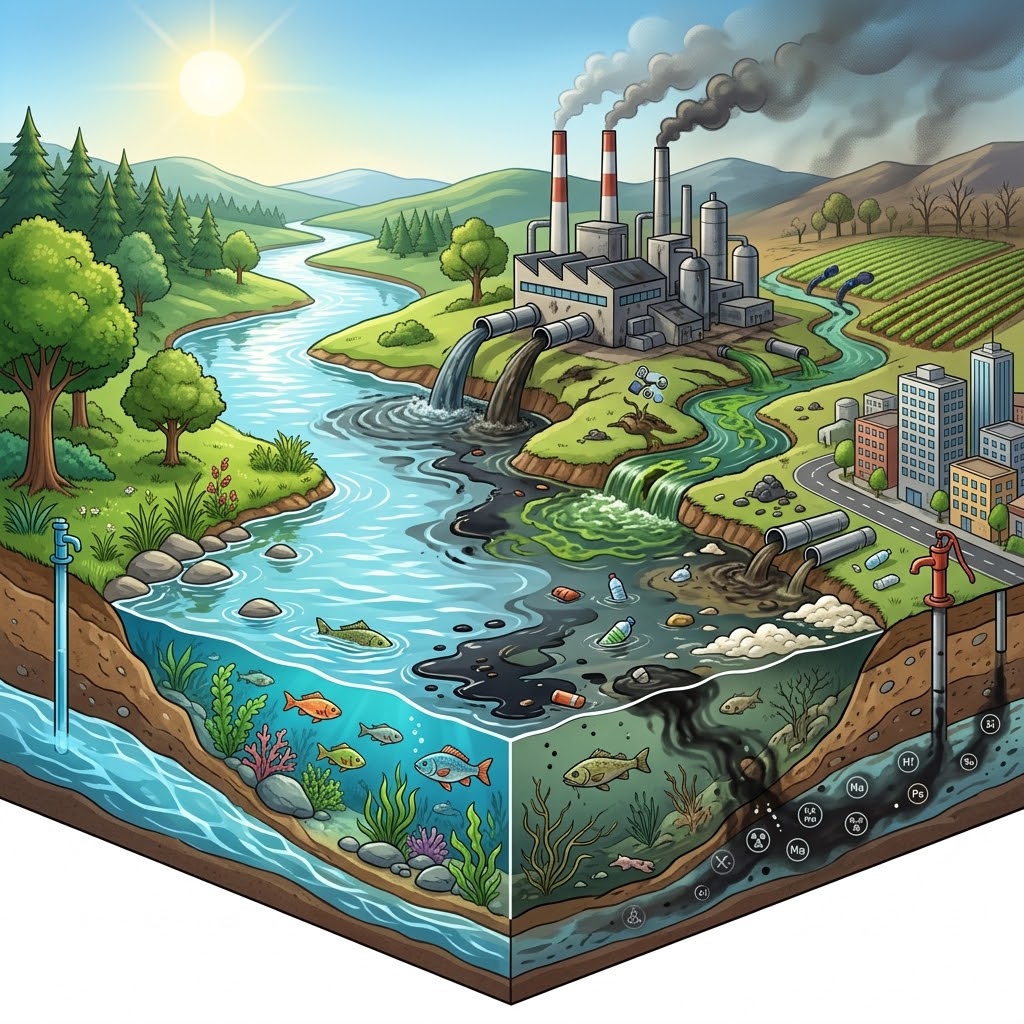
How Contamination Affects Water Quality
Internal buildup can restrict flow, increase discolouration risk, drive customer contacts, place extra demand on flushing programmes, and let debris reach customer meters and appliances.
Networks may also experience recurring discolouration events, iron and manganese exceedances, taste and odour complaints, or repeated need for reactive flushing in the same sections.
These warning signs don’t always confirm that a main needs cleaning. A network assessment can help distinguish between internal sediment, source water changes, main bursts, or other operational causes.
Benefits Of Ice Pigging For Water Mains
Ice pigging provides controlled physical cleaning without pushing a rigid mechanical pig through the live network.
Because the slurry is pumpable and deformable, it flows through bends, tees, valves, and changes in pipe diameter without becoming stuck.
Potential advantages include:
Greater pipe-wall contact than unidirectional flushing
Removal of settled sediment, biofilm, and corrosion debris
Navigation through bends, valves, and diameter changes
Minimal disruption — hydrants used, no excavation
Large lengths cleaned overnight, minimising supply interruption
Quantifiable, measurable cleaning results
Ice Pigging Applications Across The Network Lifecycle
Pre-Commissioning Cleaning
Remove construction and jointing debris from new or relined mains before they're connected to live supply.
Planned Preventive Maintenance
Scheduled cleaning based on discolouration risk sections, water quality trends, or known sediment accumulation.
Reactive Discolouration Response
Address customer discolouration complaints, iron/manganese exceedances, or contamination events quickly.
Reverse-Flow And Network Reconfiguration Prep
Clean mains in advance of planned reverse-flow operations or network reconfiguration to reduce discolouration risk.
Our Water Mains Ice Pigging Process
Each project is planned around network layout, hydrant locations, pipe material, valving, and the available working window.
- Feasibility Review
Assess network records, pipe material, diameter, hydrant spacing, and valving.
- Route And Isolation Planning
Define the cleaning section, isolation points, and injection/receiving hydrants.
- Access And Discharge Planning
Confirm injection and receiving points, containment, and discharge/disposal arrangements.
- Site Preparation
Set up tankers, temporary connections, traffic management, and required safety controls.
- Controlled Ice Slurry Injection
Inject the slurry while monitoring pressure, flow, and discharge conditions in real time.
- Verification And Restoration
Evaluate removed material, confirm water quality results, and return the main to supply.
Frequently Asked Questions
What Is Water Mains Cleaning?
How Is Ice Pigging Different From Flushing?
Does Ice Pigging Remove Biofilm?
Can Ice Pigging Cause A Main To Get Stuck?
How Long Does It Take To Clean A Main?
Discuss Your Water Mains Network
Share your network records, pipe material, hydrant locations, and known discolouration or sediment issues. Our specialists will assess whether ice pigging is suitable and recommend a project-specific approach.