
- Measured field results
Proof, not promises. Ice pigging in the wild.
Every case below is a real network, a real pipe, and a real before-and- after water sample. See what a single shift of ice pigging actually
removes — and what your operators get back.
142KM
of pipe cleaned to date
98%
avg. reduction in discolouration
<8h
typical mains-out-of-service
0
reportable safety incidents
- Featured case
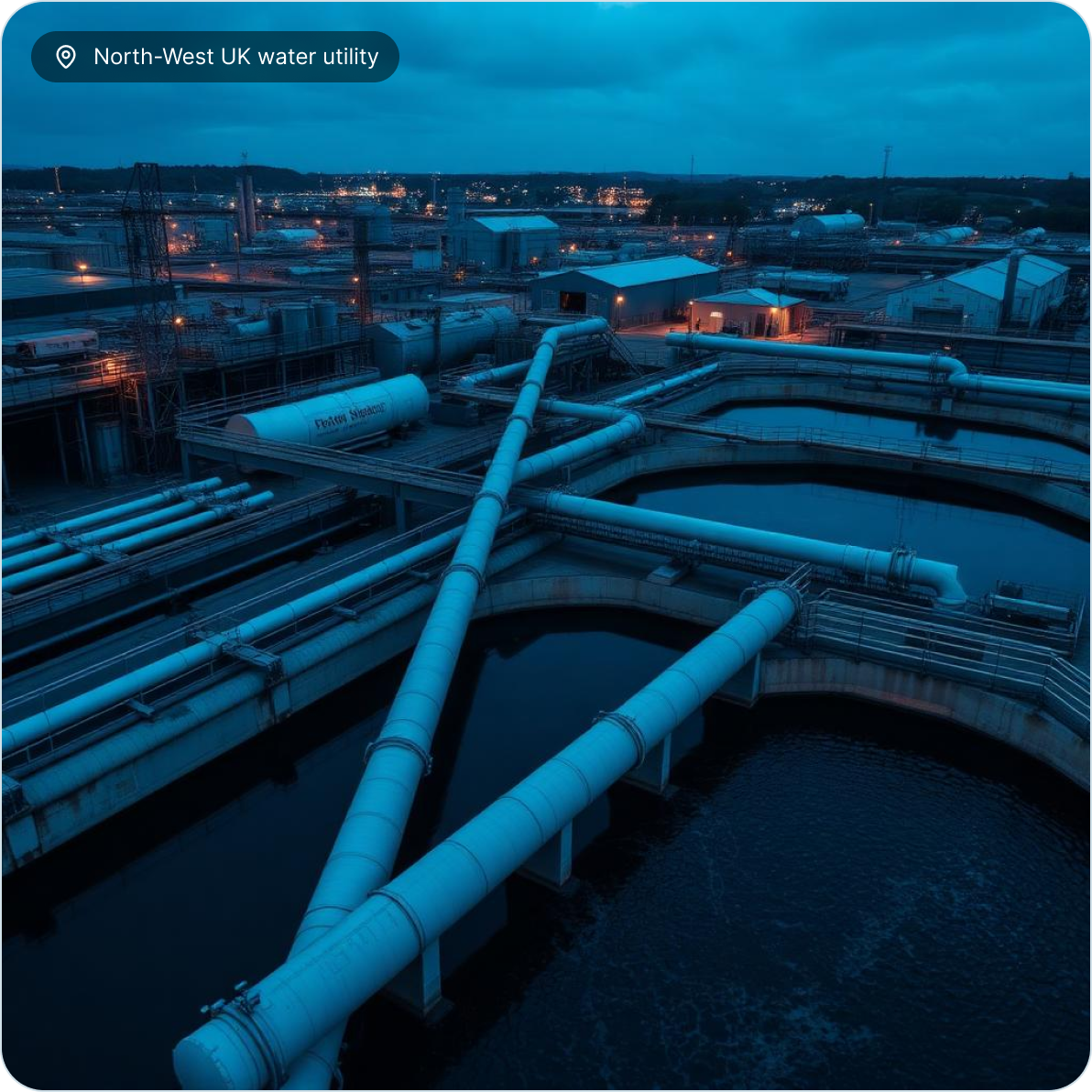
4.2 km of cast-iron trunk main, cleaned in a single overnight window.
- Municipal potable
- DN400 cast iron
- Discolouration DMA
The problem
A District Metered Area serving 14,300 properties had triggered 62 discolouration contacts in a single quarter. Traditional swabbing had failed twice — sediment simply re-mobilised within days.
What we did
Two-shift mobilisation. Ice slurry injected at the reservoir outlet, tracked at three hydrant points, discharged into a filtered bowser at the DMA extremity.
−96%
Turbidity
38 kg
Iron removed
6h 40m
Shift length
1 pipe vol
Water used
12-month follow-up: Discolouration contacts dropped from 62 to 3. Zero repeat mobilisations required.
- More from the field
Six shifts. Six networks.
A snapshot of jobs completed this year across four sectors. Full technical write-ups available under NDA.
- Municipal
- −94% Mn
Rural distribution zone, 11 km
Chained ice pigs through a looped rural DMA. Manganese-driven complaints eliminated for the full 18-month monitoring window.
- Food & Bev
- 4h → 55m
Dairy CIP loop retrofit
Replaced weekly caustic soak on a 320 m milk- transfer line. Cleaning window cut from 4h to 55 min with no chemical residue.
- Oil & Gas
- 1.9 t solids
Produced-water flowline
Removed 1.9 tonnes of wax and scale from a 6-inch platform tie-in without pigging traps or dosing chemistry.
- District Energy
- +82 kW
Campus chilled-water ring
Restored 82 kW of lost heat-exchanger capacity by shifting biofilm and iron oxide sludge from a 1.6 km closed loop.
- Municipal
- 26h recovery
Coastal DMA post-flood
Emergency callout to flush estuarine ingress. Bacteriological compliance restored in 26 hours vs. 5-day mains replacement plan.
- Food & Bev
- −340 L/wk loss
Craft brewery hot liquor line
One shift replaced an annual mechanical descale. Beer-loss between brews down by an estimated 340 L per week.
- Food & Beverage
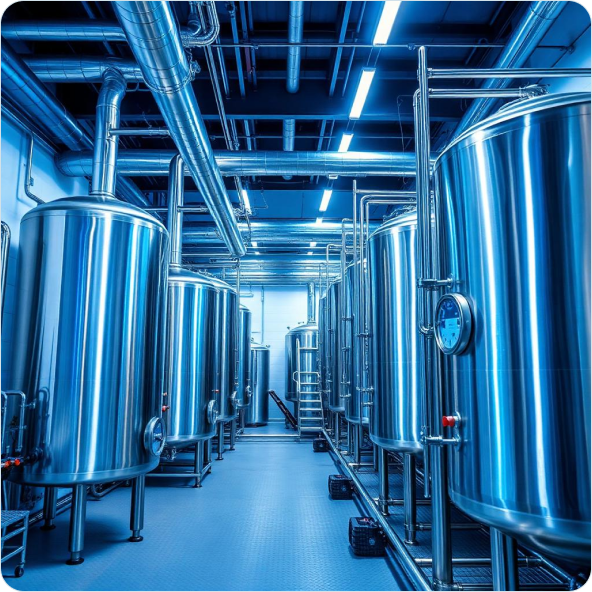
Craft brewery cuts CIP downtime by 76% on stainless transfer runs.
A 42,000 hL brewery in central Europe was losing over 20 hours a week to hot-caustic CIP on wort and beer transfer lines. Ice pigging replaced the caustic step on 6 of 9 loops, while process operators kept full traceability through the plant’s SCADA.
- Before
20.5 h/wk
CIP downtime
- After
4.8 h/wk
Ice pig + rinse
- Zero CIP chemicals in the waste stream
- Cleaning window inside a single production changeover
- Documented ATP swab results < 50 RLU on all critical points
- No mechanical intervention on gaskets or bends
- Oil & Gas — Offshore
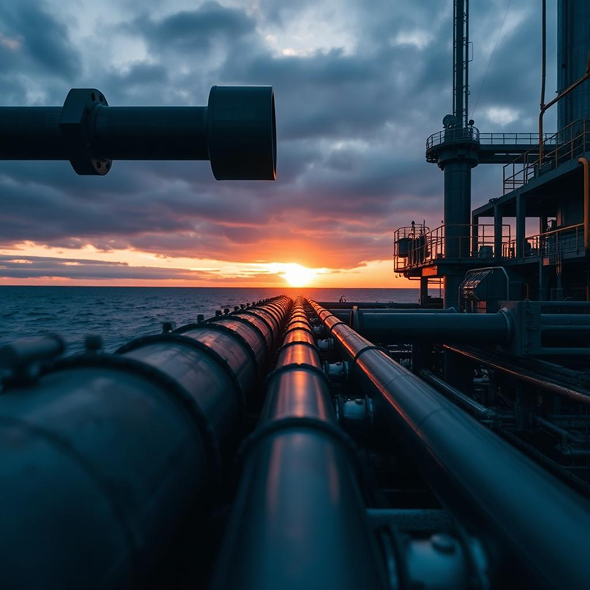
North Sea platform, 5 hours from injection to first oil.
Wax build-up in a 6-inch subsea tie-in was throttling flow by 22%. A conventional mechanical pig would have required a bi-directional trap install and a 3-day shutdown. Ice pigging cleared the line in a single production window with no permanent pigging infrastructure.
- T-0
Slurry generation on deck
- T+45m
Injection at platform manifold
- T+3h
Discharge slug captured at riser base
- T+5h
Flowline returned to production
+22%
Flow recovered
1/20
The water usage
0
Excavation needed
The story in three numbers
+82KM
Heat exchanger capacity recovered across two AHUs after a single overnight pig.
−41%
Reduction in circulation pump kWh over the following billing quarter.
0 L glycol lost
Full closed-loop inhibitor chemistry retained — no drain, refill, or re-dose.
- District Energy — University Campus
1.6 km closed loop back to design capacity — without a system drain.
- In their words
What the engineers on site actually say.
“The reporting pack landed in our inbox before the crew had left site. That is not something we are used to from a cleaning contractor.”
Network Delivery Manager
UK Water & Sewerage Company
“We got a full CIP replacement on our transfer lines without a single litre of caustic in our effluent. Compliance loved it.”
Head of Utilities
European Craft Brewery
“No traps, no shutdown, no chemistry to declare. That combination is what got this past our subsea integrity team.”
Pipeline Integrity Lead
North Sea Operator
- How we report results
The methodology behind every number on this page.
Independently measured
Turbidity, iron, manganese and ATP figures come from third-party accredited labs or client SCADA — never our own claims.
Client-approved
Every case study on this page has been signed off by the asset owner for external reference.
Like-for-like windows
Before/after data is drawn from equal-length observation windows, not cherry-picked days.
Can I get the raw before/after data from these cases?
How similar does my network need to be to see the same result?
Do you work internationally?
Can we run a pilot before committing to the whole network?
- Case study FAQ
What operators ask before they commit.
If your question is not here, our engineers respond to technical queries within one business day.
Want your pipeline in next year's case studies?
Send us your network drawing and last 12 months of water-quality data. We will come back with a feasibility view and an estimated outcome range — no sales pitch.