
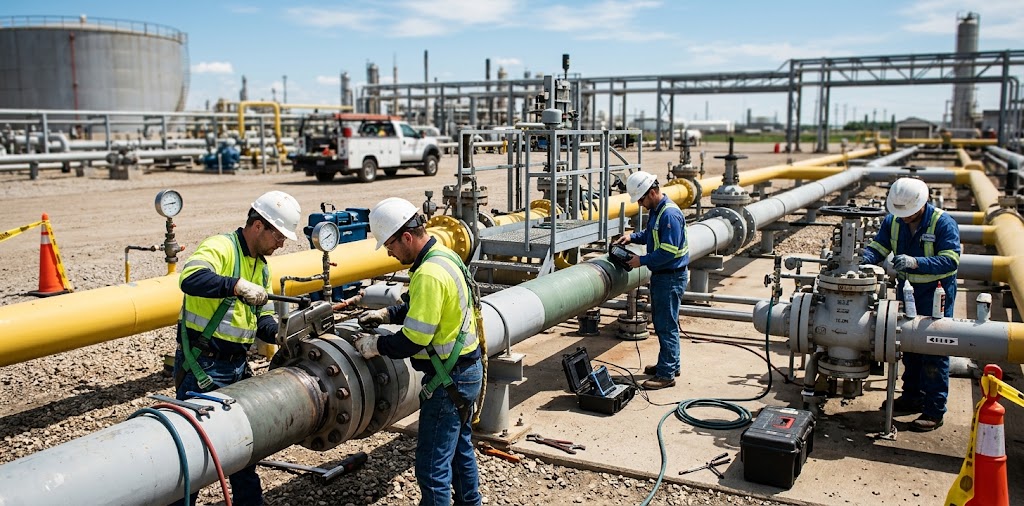
Pipeline maintenance combines monitoring, cleaning, inspection, testing, corrosion control, and repair. Each service addresses a different part of pipeline performance, and no single method can confirm that an entire system is clean, structurally sound, and ready for continued operation.
The correct maintenance program depends on the pipe material, transported fluid, operating conditions, deposit type, previous failures, and consequences of an interruption. Water mains, wastewater lines, process piping, and cooling networks may therefore require different methods and maintenance schedules.
What Does Pipeline Maintenance Include?
Pipeline maintenance includes planned and corrective work used to preserve flow, cleanliness, reliability, and asset condition. Some activities remove deposits, while others collect condition data, identify leaks, limit corrosion, or repair confirmed defects.
Maintenance generally falls into three categories. Preventive maintenance takes place according to an established plan, condition based maintenance responds to operating or inspection data, and corrective maintenance addresses a confirmed performance or integrity problem.
An effective program may include:
- Operational monitoring and condition assessment
- Internal pipeline cleaning
- Leak detection and location
- Pressure testing
- Corrosion control
- Valve, pump, and fitting maintenance
- Pipeline repair or rehabilitation
These services should work together. Cleaning can prepare a pipeline for inspection, while inspection and test results can determine where repairs or further investigation are required.
1. Pipeline Monitoring And Condition Assessment
Monitoring helps operators identify changes before they develop into major operational problems. Relevant measurements may include flow rate, upstream and downstream pressure, differential pressure, temperature, pump energy, fluid quality, and alarm history.
A gradual pressure increase may indicate growing resistance, while declining flow could result from deposits, an incorrect valve position, equipment wear, or changing downstream conditions. Monitoring identifies a symptom, but further investigation is needed to confirm its cause.
Condition assessment combines operating information with inspection records, maintenance history, pipe age, material, location, and failure consequences. This information allows operators to prioritize the sections that require cleaning, testing, inspection, or repair.
2. Internal Pipeline Cleaning
Internal cleaning removes material that can restrict flow, affect water or product quality, interfere with heat transfer, or prevent inspection equipment from moving through the line. Possible deposits include sediment, biofilm, grease, scale, wax, product residue, and loose corrosion material.
The appropriate method depends on the deposit and pipeline configuration. The main industrial pipeline cleaning methods include flushing, mechanical pigging, ice pigging, chemical cleaning, high pressure water cleaning, air scouring, and combined cleaning programs.
Flushing can transport loose debris when adequate velocity and discharge capacity are available. Rigid or foam pigs provide mechanical contact, but they usually require a pipeline with suitable launch and receiving facilities, bore continuity, and predictable internal geometry.
Ice pigging uses pumpable ice slurry rather than a rigid cleaning device. During the ice pigging process, the slurry forms a flexible cleaning plug that contacts the pipe wall and carries loosened deposits toward a controlled discharge point.
Because the ice can negotiate many bends and diameter changes, it may be considered for suitable pipelines where rigid pigging is difficult. If movement stops, the ice can melt, reducing the risk of leaving a solid pig trapped inside the system.
Cleaning does not measure wall thickness, locate every leak, or repair structural damage. Material recovered during cleaning may indicate that additional condition assessment is appropriate, but it cannot establish the complete integrity of the pipeline.
3. Pipeline Inspection
Inspection services collect evidence about the pipe, its components, or its surroundings. The selected inspection method should match the expected defect, pipeline material, accessibility, operating conditions, and required level of detail.
External inspection may identify coating damage, exposed pipe, erosion, movement, damaged supports, visible corrosion, or activity near the pipeline. Internal inspection may use cameras, caliper tools, magnetic flux leakage, ultrasonic technology, or other specialized equipment.
Cleaning pigs and inspection pigs perform different tasks. A cleaning pig removes debris, while a smart pig uses sensors to collect information about geometry, wall loss, cracks, or other anomalies. The different types of pipeline pigging should therefore be selected according to a defined cleaning, product handling, or inspection objective.
A pipeline may need cleaning before an inline inspection. Deposits can restrict tool passage, cover the internal surface, contaminate sensors, or reduce the quality of the resulting data.
4. Leak Detection And Location
Leak detection services identify changes that may indicate fluid is escaping from the system. Depending on the application, operators may use pressure monitoring, flow balancing, acoustic equipment, tracer methods, sensors, visual surveys, or automated monitoring systems.
A leak detection alarm is the beginning of an investigation rather than a complete diagnosis. Operators must confirm the leak, establish its location, determine its cause, isolate the affected section, and select an appropriate repair.
Water utilities must also consider water loss, service disruption, and possible contaminant entry. Industrial facilities may need to evaluate production loss, environmental exposure, fluid compatibility, and hazards associated with the transported material.
5. Hydrostatic And Pressure Testing
Pressure testing evaluates whether an isolated pipeline can contain a specified test pressure under controlled conditions. Hydrostatic testing commonly uses water or another approved liquid, while other systems may require a different test medium and procedure.
A testing plan must address filling, trapped air, pressure control, temperature, calibrated instruments, test duration, leak monitoring, fluid disposal, drying, and return to service. Requirements vary according to the pipeline, service, owner standards, and applicable regulations.
Passing a pressure test is not the same as obtaining a detailed map of every internal anomaly. Pressure testing and inspection may be used together when operators require both pressure containment evidence and information about the location or characteristics of defects.
6. Corrosion Control
Corrosion control reduces the conditions that allow pipe materials to deteriorate. Methods may include protective coatings, internal linings, cathodic protection, corrosion inhibitors, oxygen control, suitable water chemistry, and removal of water or deposits.
Internal deposits can create areas where water, chemicals, or microbial activity remain in contact with the pipe. Cleaning may remove loose corrosion products and deposited material, but it does not restore metal that has already been lost.
An active corrosion mechanism must be investigated separately. Operators may need fluid analysis, wall thickness measurements, coating surveys, cathodic protection testing, material review, or specialist corrosion assessment before selecting corrective work.
7. Pipeline Repair And Rehabilitation
Inspection, leak detection, and testing may reveal defects that require physical intervention. The response could include a clamp, sleeve, joint repair, valve replacement, sectional pipe replacement, internal lining, coating, or broader rehabilitation project.
The repair method depends on the defect type, remaining pipe strength, operating pressure, pipeline material, location, access, and expected remaining service life. Some sections can be repaired economically, while recurring failures or widespread deterioration may justify rehabilitation or replacement.
Repairs should be followed by suitable inspection, testing, flushing, or water quality verification. Maintenance records must document the affected section, work completed, acceptance results, and any recommended follow up.
How Pipeline Maintenance Services Work Together
Pipeline maintenance is most effective when services are selected in a logical sequence. Operators should begin by defining the problem and identifying the evidence required to make a reliable decision.
A typical program starts with operating data and asset records. Cleaning may then remove deposits or prepare the route for inspection, after which condition data and test results guide repair, corrosion control, or future monitoring.
The final stage is verification. Relevant evidence might include stable flow, reduced differential pressure, removed solids, acceptable water quality, completed inspection records, pressure test results, leak checks, or documented repair acceptance.
Where Ice Pigging Fits Into Pipeline Maintenance
Ice Pigging™ is a physical cleaning service within a wider pipeline maintenance program. It may support routine deposit removal, performance recovery, commissioning, product changeovers, water quality maintenance, or cleaning before suitable inspection work.
Applications include drinking water mains, wastewater and force mains, food and beverage lines, industrial process piping, district energy systems, and chilled water networks. The complete range of ice pigging applications reflects the different deposits, operating objectives, and verification requirements found across these systems.
A feasibility assessment considers pipe material, diameter, length, bends, branches, valves, access points, isolation, available pressure, deposit type, discharge arrangements, and the permitted maintenance window. These factors determine whether the line can be cleaned safely and whether ice pigging is appropriate.
Results may be documented through discharge observations, samples, turbidity, recovered solids, water use, flow, differential pressure, or application specific testing. A reliable approach to measuring ice pigging results connects the original cleaning objective with baseline information and agreed acceptance criteria.
Ice pigging does not replace inline inspection, hydrostatic testing, leak repair, corrosion control, or structural rehabilitation. Its role is to remove suitable internal deposits and prepare the pipeline for continued operation or further maintenance work.
Frequently Asked Questions
The correct maintenance approach depends on the system and the problem being addressed. These questions cover the practical distinctions operators should understand.
How Often Should Pipelines Be Maintained?
There is no universal interval. Maintenance frequency should reflect pipeline condition, deposit accumulation, operating changes, inspection findings, water or product quality, failure history, regulations, and the consequences of an interruption.
What Is The Difference Between Pipeline Cleaning And Inspection?
Cleaning physically removes deposits from inside the pipe. Inspection collects information about geometry, wall condition, corrosion, cracks, joints, coatings, or other potential defects.
Can Pipeline Cleaning Improve Flow?
Cleaning may improve flow when deposits are reducing the available bore or increasing hydraulic resistance. Comparable measurements should be taken before and after cleaning to separate the result from changes in pumps, valves, or demand.
Does Pipeline Cleaning Prevent Corrosion?
Removing water, sediment, biofilm, and other deposits may reduce conditions associated with some internal corrosion mechanisms. Cleaning does not replace corrosion monitoring, chemistry control, coatings, cathodic protection, or repair of existing wall loss.
Can Ice Pigging Clean Water And Wastewater Pipelines?
Ice pigging may clean suitable water mains, wastewater pipelines, and force mains. The method, discharge plan, verification process, and return-to-service requirements must be evaluated for the individual system.
How Are Pipeline Maintenance Results Verified?
Verification may include operating data, inspection findings, removed solids, water quality tests, pressure records, leak checks, repair documentation, and final system performance. The chosen measurements should match the original maintenance objective.
Build A Maintenance Program Around Evidence
Essential pipeline maintenance involves more than responding to a blockage or leak. Monitoring, cleaning, inspection, testing, corrosion control, and repair provide different information and should be coordinated around the actual condition of the asset.
Operators planning an internal cleaning project can share their pipeline drawings, dimensions, access points, deposits, operating concerns, and required results with the Ice Pigging™ team. A project specific assessment can then determine whether physical ice slurry cleaning fits the wider maintenance program.