
District Heating & Cooling Network Pipe Cleaning With Ice Pigging
Remove sediment, particulate contaminants, weld debris, and construction residue from district heating and cooling transmission pipework with project-specific ice pigging.
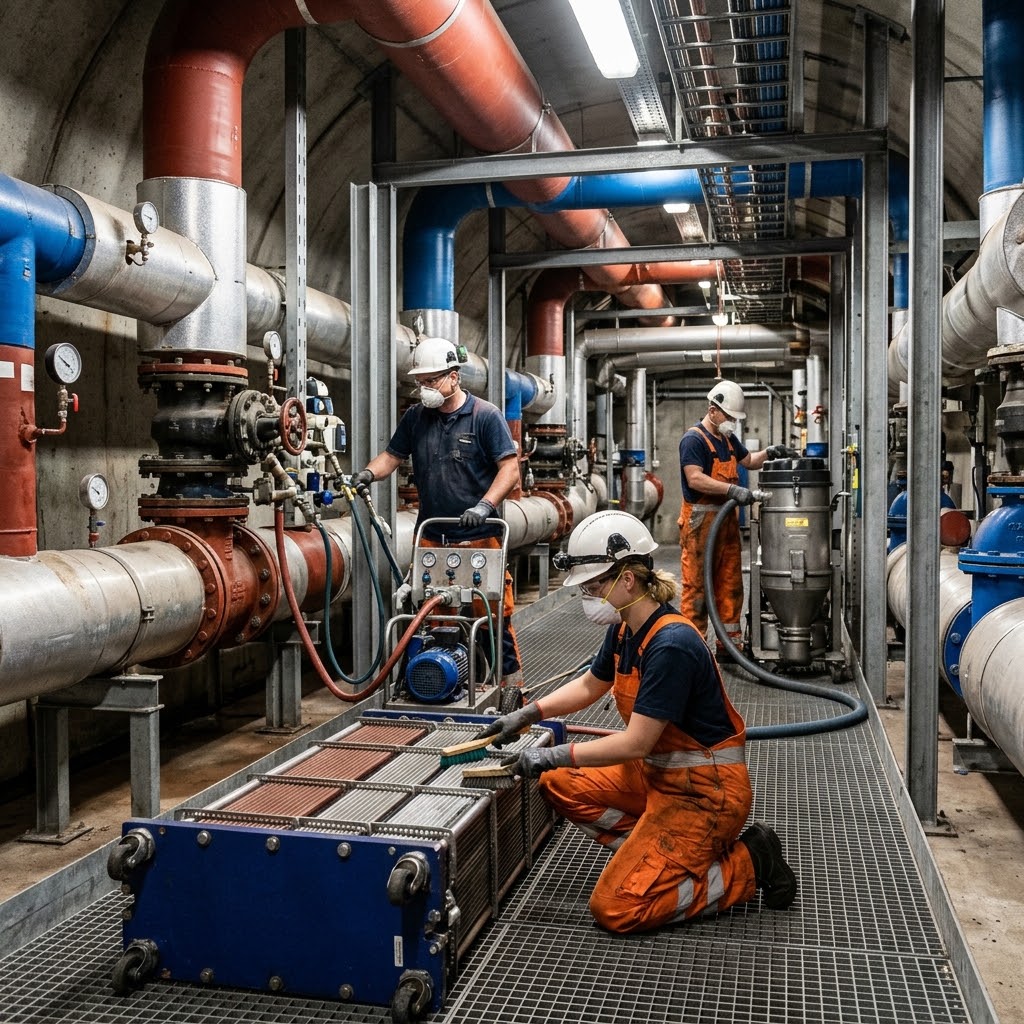
Specialized Cleaning For District Heating And Cooling Networks
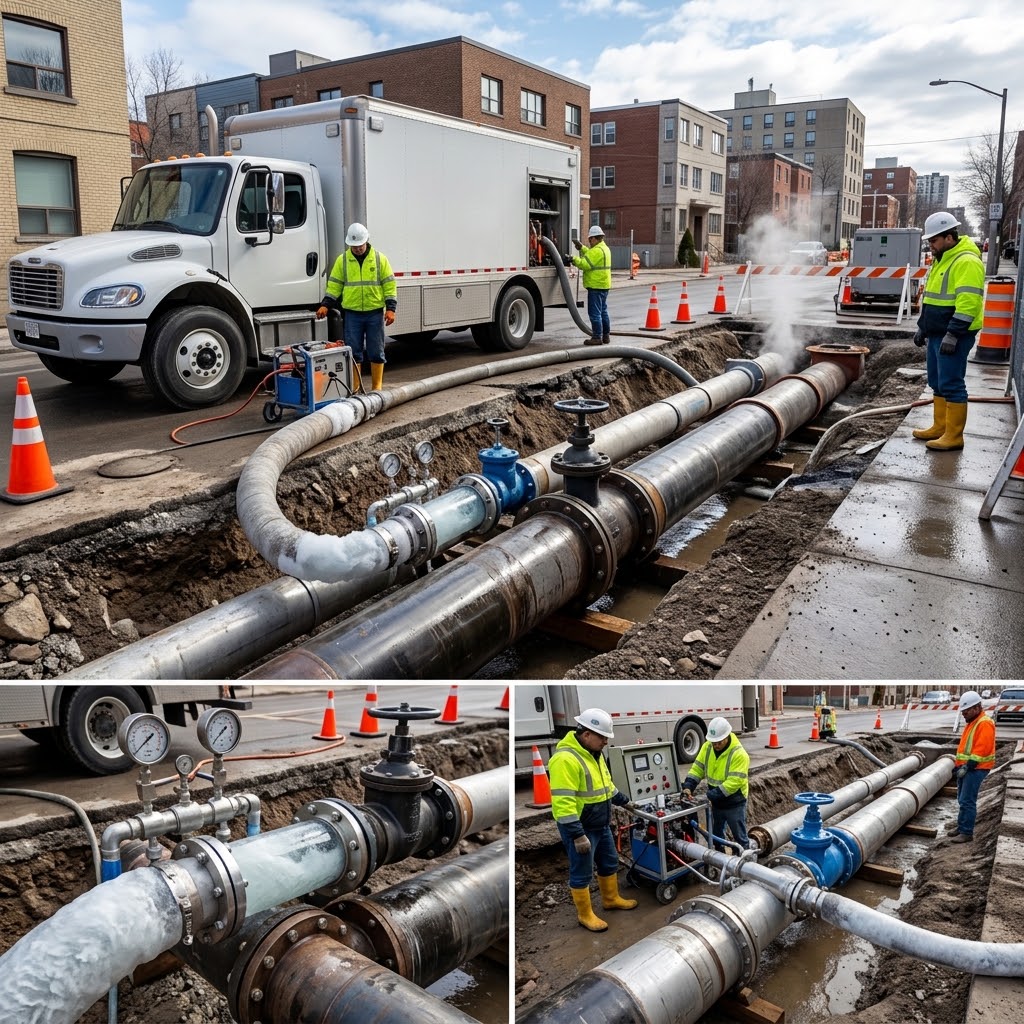
Ice pigging uses an engineered mixture of ice crystals and liquid to form a pumpable, semi-solid cleaning plug.
The slurry moves through a selected pipeline section, contacts the internal pipe surface, and carries loosened material toward a planned receiving point.
This physical cleaning method can complement commissioning flushing, filtration, and water treatment programs used across district heating and cooling networks.
It does not replace ongoing water chemistry management, but it can remove deposits and construction debris that flushing alone may not effectively clear before a network is put into service.
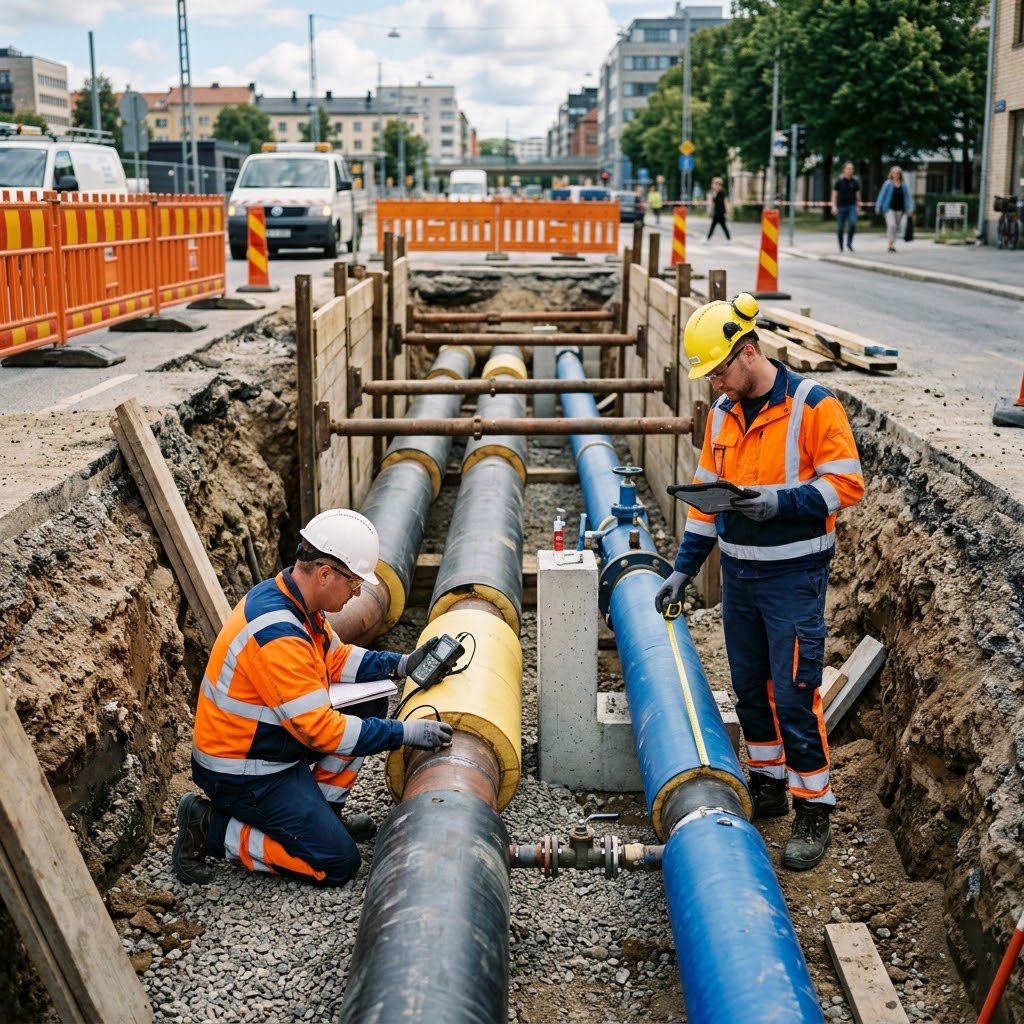
District Heating And Cooling Pipework We Can Assess
Networks vary by layout, pipe material, and stage of the project. We assess pipe size, routing, fluid composition, access points, isolation requirements, and cleaning objectives before recommending ice pigging.
Below-Ground Transmission Mains
Remove sediment and construction residue from buried heating and cooling transmission pipework running between the energy centre and connected buildings.
Energy Centre And Plant Room Pipework
Clear debris from pipework connecting the energy centre, plant rooms, and distribution headers.
New-Build Commissioning Pipework
Clean newly laid sections of a network before dynamic flushing and handover, removing weld debris, swarf, and fabrication residue.
Branch And Service Connections
Address complex routes containing headers, bends, valves, tees, and diameter changes feeding individual buildings or blocks.
Heat Exchanger Supply And Return Lines
Clean suitable connecting pipelines ahead of heat exchangers. Small internal passages and sensitive plant require separate assessment.
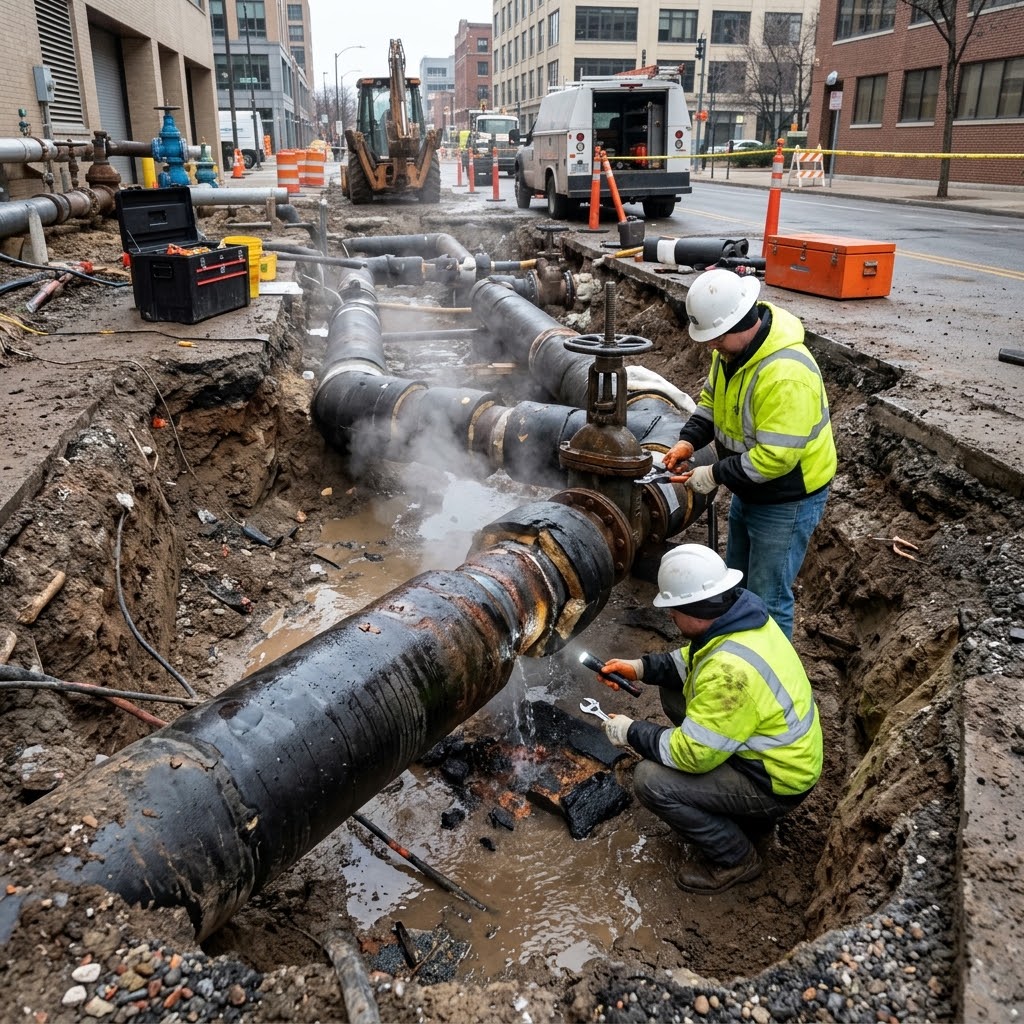
Common District Heating And Cooling Pipeline Problems
Transmission and distribution pipework can collect contaminants during fabrication, installation, commissioning, and early operation. Ice pigging can remove several forms of buildup from suitable systems.
Construction And Commissioning Debris
Weld debris, swarf, pipe scale, jointing compound, and fabrication residue may remain inside newly laid heating and cooling pipework before it enters service.
Sediment And Particulate Contamination
Sand, grit, rust particles, and suspended solids introduced during installation can settle in low points and travel toward pumps, valves, and heat exchangers.
Corrosion Debris
Corrosion products can develop in sections of the network and accumulate at low-flow points, restricting flow and affecting heat transfer.
Biofilm And Fouling In Cooling Circuits
Warm water, stagnation, and inconsistent circulation in cooling sections can allow biofilm and fouling to develop along internal pipe surfaces.
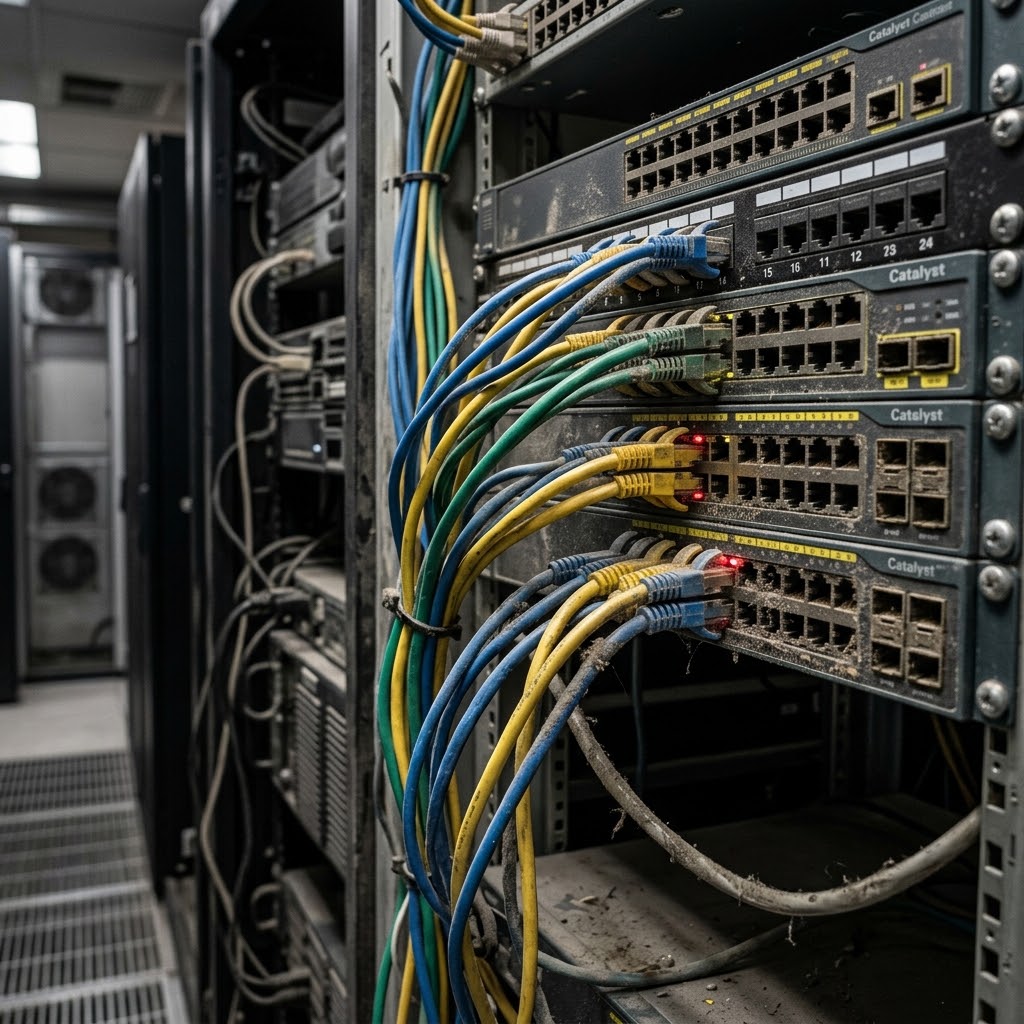
How Contamination Affects Network Performance
Internal debris and sediment can restrict flow, increase differential pressure, damage heat exchangers, shorten pipework and pump life, and disrupt the commissioning timeline.
Facilities may also experience blocked strainers, uneven heat distribution across connected buildings, and delays completing dynamic flushing before handover.
These warning signs do not always confirm that a pipeline requires cleaning. A network assessment can help distinguish between construction debris, equipment faults, filtration problems, and other possible causes.
Benefits Of Ice Pigging For District Heating And Cooling Networks
Ice pigging provides controlled physical cleaning without sending a rigid mechanical pig through the network and without the extended timelines associated with conventional dynamic flushing.
Because the slurry is pumpable and deformable, it can move through many bends, fittings, valves, and changes in pipe diameter typically found in district networks.
Potential advantages include:
Faster commissioning than conventional flushing
Greater pipe-wall contact than water-only flushing
Removal of weld debris, sediment, and fabrication residue
Navigation through complex, large-bore pipework
Insertion and ejection through existing fill and drain vents
Lower water, power, and chemical usage during commissioning
Ice Pigging Applications Across The Network Lifecycle
Pre-Commissioning Cleaning
Position ice pigging as a potential method for removing construction debris and residual material from suitable heating and cooling pipework before it enters service.
Phased Commissioning Support
Cover cleaning carried out in stages as sections of a large network are completed, helping keep the overall commissioning programme on schedule.
Planned Preventive Maintenance
Cover scheduled cleaning based on inspection results, water quality changes, flow restrictions, or known sediment accumulation on operating networks.
Post-Expansion And Modification Cleaning
Ice pigging may also be considered after network extensions, new building connections, or modifications to existing transmission and distribution pipework.
Our District Heating And Cooling Ice Pigging Process
Each project is planned around network drawings, pipe dimensions, materials, access points, operating limits, and the available commissioning or maintenance window.
- Feasibility Review
Assess network drawings, pipe dimensions, materials, fluids, valves, and fittings.
- Route And Isolation Planning
Define the cleaning route, section breaks, isolation points, and project sequence.
- Access And Discharge Planning
Select injection, receiving, containment, and disposal arrangements using existing fill and drain vents where possible.
- Site Preparation
Prepare temporary connections, equipment access, and required safety controls.
- Controlled Ice Slurry Injection
Inject the slurry while monitoring pressure, flow, and discharge conditions across each pipe run.
- Verification And Restoration
Evaluate removed material, confirm results, and return the section to the commissioning programme or service.
Frequently Asked Questions
What Is District Heating And Cooling Network Pipe Cleaning?
Can Ice Pigging Replace Dynamic Flushing During Commissioning?
Ice pigging can be used as part of, or in place of, elements of a dynamic flushing programme on suitable sections, often reducing the time and water volume required. A network assessment determines where it is appropriate.
What Pipe Sizes Can Ice Pigging Clean?
Ice pigging is commonly applied to larger-bore district heating and cooling pipework, typically between 40mm and 500mm, including below-ground transmission mains and plant room pipework. Pipe dimensions and access points are confirmed during assessment.
Does Ice Pigging Require Network Modifications?
In many cases ice can be inserted and ejected through existing fill and drain vents, without permanent modifications to the network. Access requirements are confirmed for each project.
Can Ice Pigging Be Used On New-Build And Existing Networks?
Yes. Ice pigging can be applied during pre-commissioning of newly laid pipework and as a maintenance technique on existing district heating and cooling networks, subject to assessment.
Discuss Your District Heating Or Cooling Network
Share your network drawings, pipe sizes, fluid type, and commissioning timeline. Our specialists will assess whether ice pigging is suitable and recommend a project-specific approach.