
Every pipeline cleaning project has a price tag, but the invoice is only part of the picture. Sediment, grease, and other buildup carry costs of their own. The way a pipeline is cleaned also affects how much time, water, and disruption the work requires.
That’s why “How much does Ice Pigging cost?” often leads to a more useful question: what does it cost to clean this pipeline, all things considered?
This article explains how Ice Pigging works, what drives its cost, where it can help reduce overall cleaning expenses, and which pipeline owners and operators may benefit most.
How Ice Pigging Works
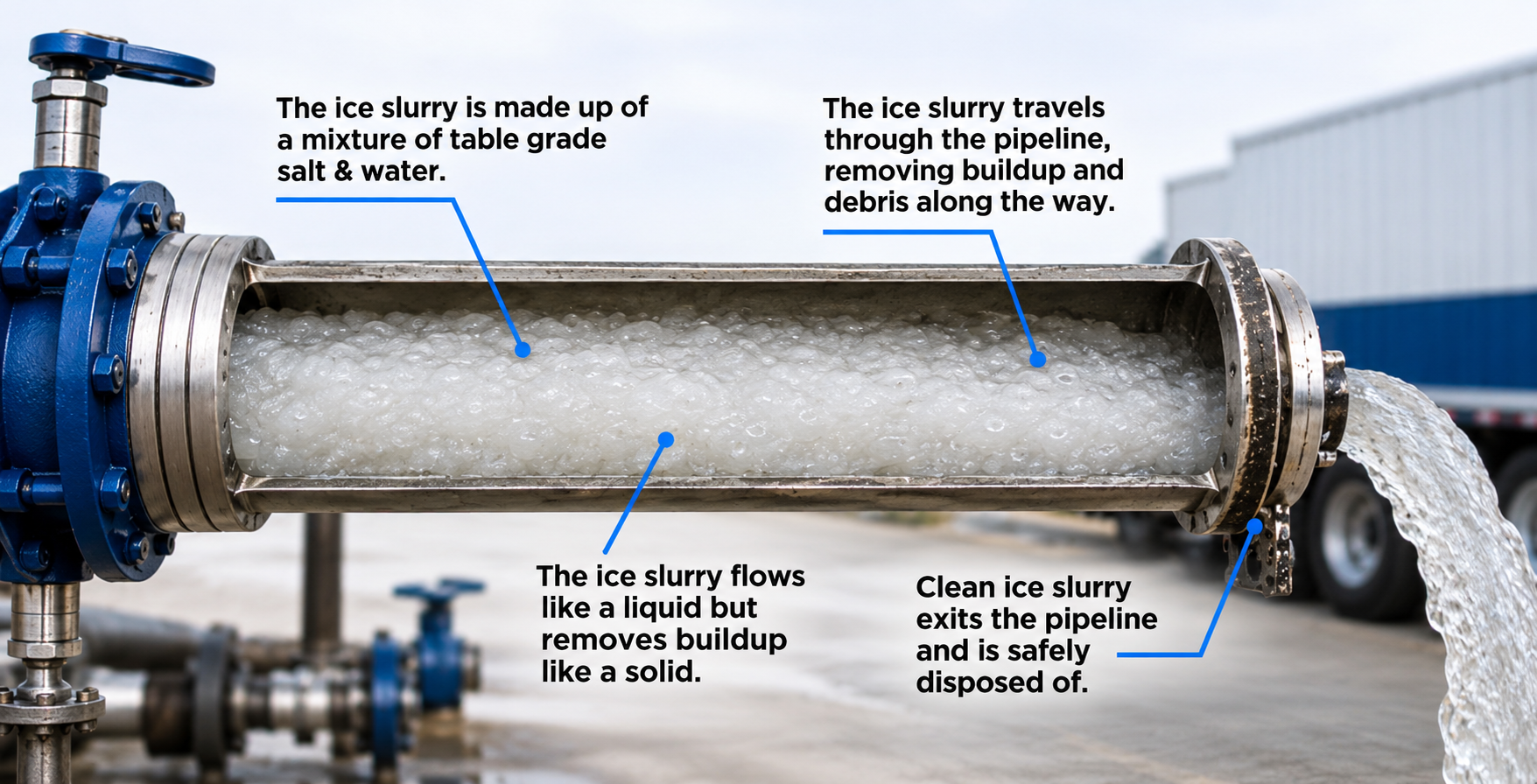
Ice Pigging is a pipeline cleaning method that uses a pumpable ice slurry instead of a solid cleaning tool. The slurry is made from water and table-grade salt, processed in specialized equipment into a dense mixture of small ice crystals or slurry.
The slurry is pumped into the pipeline through a suitable access point and travels along the line. As it moves, its ice-crystal structure scours the inside of the pipe wall. It loosens sediment, fats, oils, and grease (FOG), and other deposits, then carries that material to a designated discharge point where it can be collected and handled.
The idea of Ice Pigging is often summed up into the phrase “Ice Pigging moves like a liquid but acts like a solid.” The slurry is pumpable enough to follow the pipeline’s flow path, yet structured enough to pull debris and sediment from the pipe that water alone does not.
For a closer look at the full process, read our complete guide to Ice Pigging or watch Ice Pigging Explained.
The Hidden Costs of Pipeline Buildup
Before weighing what cleaning costs, it helps to understand what buildup costs. As deposits accumulate on the pipe wall, they reduce the pipe’s effective internal diameter. Depending on the system, that can lead to:
- Flow restrictions that reduce system performance
- Water quality concerns in drinking water and distribution systems
- Repeated maintenance that manages symptoms without fully addressing the buildup
- Operational uncertainty about why a line isn’t performing as expected
These costs rarely show up as a single line item. Over time FOGs (fats, oils, and grease) and other forms of buildup accumulate along the interior walls of a pipeline, gradually reducing its effective diameter and even corroding the pipe. As the available space for flow decreases, restrictions develop, making it more difficult for wastewater to move efficiently through the system.
Cleaning addresses the buildup directly. The real question is which cleaning method does that most efficiently for a given pipeline.
How Much Does Ice Pigging Cost?
There’s no single price for Ice Pigging. Each project is scoped around the pipeline and the work it requires. The main factors that influence cost include:
- Pipe diameter, length, and material
- Type, amount, and location of deposits
- Location and accessibility of entry and discharge points
- Valves, bends, branches, and fittings along the route
- Site conditions, traffic control, and safety requirements
- Discharge handling and disposal requirements
- Whether more than one cleaning pass is needed
- Equipment, transportation, and project logistics
An Australian study found that Ice Pigging was approximately six times more cost-effective than conventional flushing when measured by the cost per pound of sediment removed.
The study also found that Ice Pigging removed up to 17 times more sediment from water mains while using 50% less water than traditional flushing.
What You’ll Need for an Accurate Quote
A provider will typically ask about the pipe’s diameter, length, material, and layout, along with available access points, known or suspected deposits, and operating conditions. They’ll also want to know about any discharge, sampling, or documentation requirements. The more of this you gather in advance, the more accurate your estimate will be. You can request an Ice Pigging Quote from our experienced team to discuss your project requirements and find the right cleaning solution for your system.
Where Ice Pigging Can Help Reduce Overall Costs
Ice Pigging isn’t automatically the least expensive option. In suitable applications, though, it can reduce several costs that make pipeline cleaning more expensive than the service price alone suggests.
Using Existing Access Points
The slurry can often be introduced and recovered through existing connections, such as hydrants. In those cases, the project may avoid the cost and disruption of excavating to create access. Whether this applies depends on the pipeline’s layout and available access points.
Less Operational Disruption
Many Ice Pigging projects can be completed with shorter service interruptions than more invasive approaches. Any operational changes a project requires are specific to that pipeline and should be planned in advance.
Water Use Compared With Flushing
In suitable applications, Ice Pigging can significantly reduce water usage compared to conventional flushing. Traditional flushing methods may require up to 4–5 times the pipeline’s internal volume in water to achieve effective cleaning, often resulting in substantial water waste.
By comparison, Ice Pigging has demonstrated up to 70% less water wastage than comparable flushing projects, while providing a more effective cleaning process.
Lower Risk of a Stuck Cleaning Tool
With conventional pigging, a solid tool has the risk of becoming lodged in a pipeline which can lead to an unplanned pig retrieval. If an ice slurry stops moving, it melts back into water, so there’s no solid pig to recover.
Addressing Buildup Before Larger Decisions
When deposits are contributing to a flow problem, cleaning can be a practical step to evaluate before committing to larger capital work. Keep in mind that cleaning is not a condition assessment. It won’t measure wall thickness or confirm structural condition, so pair it with the appropriate inspection technology where those questions matter.
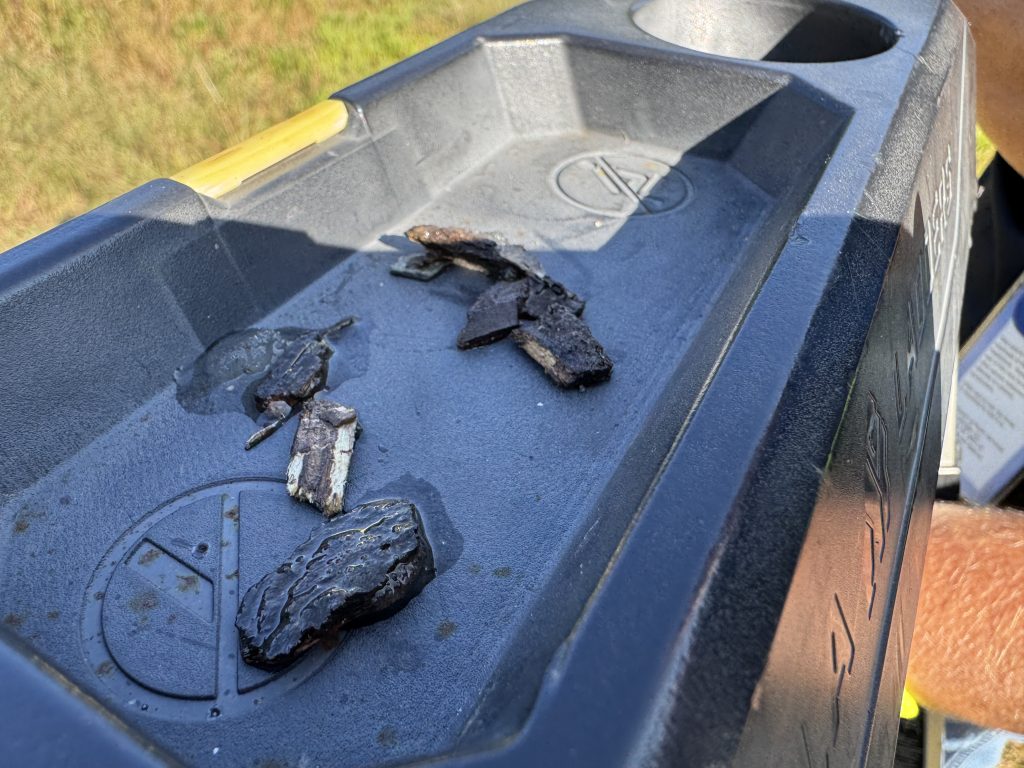
Debris from pipeline after Ice Pigging
Ice Pigging vs. Other Pipeline Cleaning Methods: A Cost Perspective
Comparing cleaning methods on price alone can be misleading. A more useful comparison looks at what drives total project cost: preparation, access, water use, downtime, and risk.
- Water flushing relies mainly on hydraulic flow to carry loose material out of the line. It can be an effective part of routine maintenance, but it may not dislodge material that adheres to the pipe wall.
- Foam and mechanical pigging push a solid or deformable tool through the pipe. They work well in lines designed for them, but they typically need launch and receiving points, and valves, or diameter changes can limit where they travel.
- Chemical cleaning uses cleaning agents to loosen or dissolve certain deposits, which brings handling, compatibility, and disposal considerations. Ice Pigging’s slurry, by contrast, is made from water and table-grade salt.
- Excavation or replacement is the most disruptive path. It’s appropriate when a pipe is structurally compromised, but when buildup is the main problem, cleaning may be worth evaluating first.
No single method is the cheapest choice for every pipeline. The right answer depends on the pipe, the deposits, and the system’s operating requirements.
Who Is Ice Pigging a Good Option For?
Ice Pigging can be a cost-effective option for a range of pipeline owners and operators, including:
- Municipal water utilities managing water mains that collect sediment, manganese, or biofilm
- Wastewater operators dealing with FOG buildup in force mains and similar lines
- Industrial facilities with process lines where buildup affects performance
- Data centers and other critical facilities whose water and utility systems need to stay reliable
- Engineering firms and consultants specifying pipeline maintenance programs for clients
Signs Ice Pigging May Be a Good Fit
- Buildup is affecting flow or water quality
- The line includes valves, or diameter changes that complicate conventional pigging
- Access is limited, or excavation would be costly or impractical
- Water use or service interruptions are a concern
When Another Approach May Be Better
- Deposits are hard or strongly bonded scale
- The pipe has structural damage or leaks that need repair
- The main need is inspection data, such as wall thickness or condition assessment
Every pipeline is different, so suitability should always be evaluated case by case. If you are unsure on if Ice Pigging is the right fit for you check out our video on Exploring Proven Pipeline Cleaning Methods.
Is Ice Pigging Cost-Effective for Your Pipeline?
The only way to know is to evaluate your specific pipeline. Before talking to a provider, gather what you can about:
- Pipe diameter, length, material, and age
- Layout, including valves, bends, branches, and diameter changes
- Available entry and discharge points
- Known or suspected deposits and where they collect
- Performance or water quality issues you’ve observed
- Operating constraints, such as acceptable service interruptions
- Discharge, sampling, and documentation requirements
With this information, experienced Ice Pigging contractors can help determine whether the method is a cost-effective fit for your system.
Want to see the process for yourself? Watch Ice Pigging Explained to see how the slurry moves through a pipeline and carries deposits out.
Frequently Asked Questions
Is Ice Pigging cheaper than flushing?
Not always on price alone. Flushing may cost less upfront, but a fair comparison also looks at water use, how well each method removes the deposits in your line, and how often cleaning needs to be repeated.
How long does an Ice Pigging project take?
Project length depends on the pipeline’s length and diameter, the type and amount of deposits, and how many passes are needed. The length of the project can also depend on how many batches of Ice a company can prepare beforehand.
Does Ice Pigging require excavation?
Often, no. The slurry can usually be introduced and recovered through existing access points, such as hydrants. Whether excavation is needed depends on the pipeline’s layout and available access.
What affects the cost of cleaning a water main?
The main factors are pipe diameter and length, the type and amount of buildup, access to entry and discharge points, site conditions, discharge handling, and the number of cleaning passes required.