
Industrial Process Pipeline Cleaning Services With Ice Pigging
Remove biofilm, sediment, corrosion debris, and process residue from suitable industrial pipelines with project-specific ice pigging.
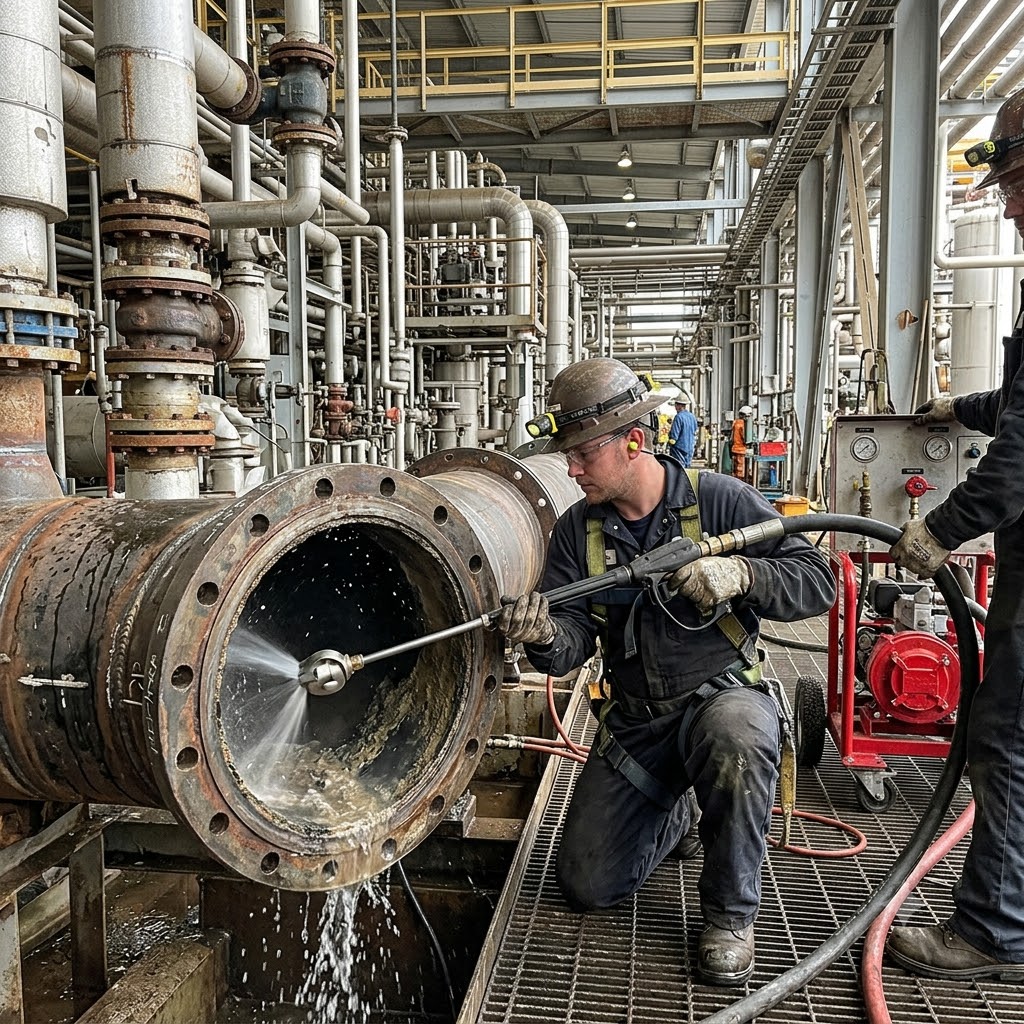
Specialized Cleaning For Industrial Process Pipelines
Ice pigging uses an engineered mixture of ice crystals and liquid to form a pumpable, semi-solid cleaning plug.
The slurry moves through a selected pipeline section, contacts the internal pipe surface, and carries loosened material toward a planned receiving point.
This physical cleaning method can complement filtration, corrosion control, microbial management, and chemical treatment programs.
It does not replace ongoing process water treatment, but it can remove deposits that flushing or filtration alone may not effectively address.
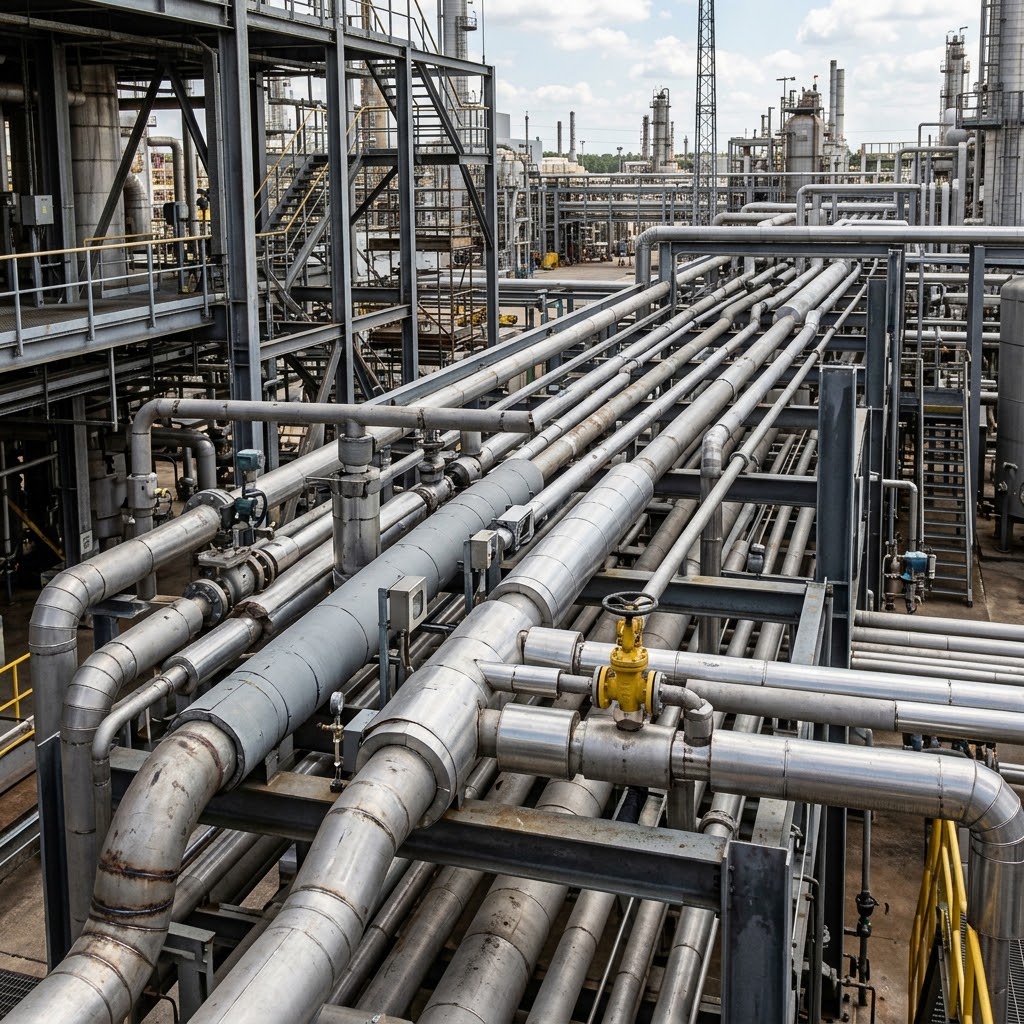
Industrial Process Pipelines We Can Assess
Process systems vary by facility. We assess pipe size, layout, fluid composition, access points, isolation requirements, and cleaning objectives before recommending ice pigging.
Process Water And Utility Piping
Remove loose debris and deposits from suitable supply and return lines feeding production equipment.
Product Transfer Lines
Clear residue, sediment, and cross-contamination risk from compatible transfer piping between vessels and process units.
Cooling And Heat Transfer Loops
Clean complex routes containing headers, bends, valves, and diameter changes used for process cooling.
Closed-Loop And Recirculating Systems
Address settled solids and corrosion products following fluid compatibility checks.
Heat Exchanger Supply And Return Lines
Clean suitable connecting pipelines. Small internal passages and specialty circuits require separate assessment.
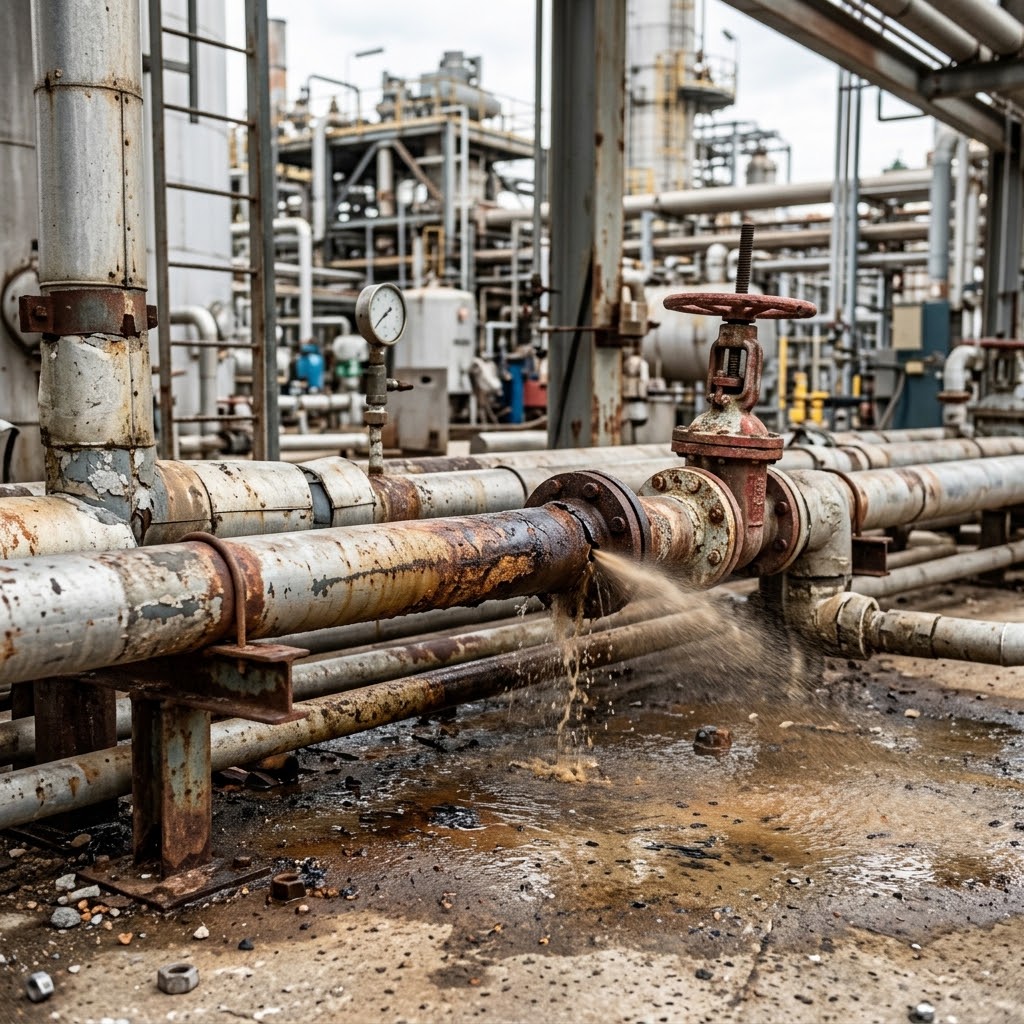
Common Industrial Pipeline Problems
Process pipelines can collect contaminants during construction, commissioning, operation, and low flow periods. Ice pigging can remove several forms of buildup from suitable systems.
Biofilm And Microbial Buildup
Warm fluid, stagnation, and inconsistent circulation can allow biofilm to develop along internal pipe surfaces.
Sediment And Corrosion Debris
Rust particles, corrosion products, and suspended solids can settle in low-flow areas and repeatedly block filters or strainers.
Construction And Commissioning Debris
Weld debris, fabrication residue, dust, pipe scale, and jointing material may remain inside newly installed process pipelines.
Product Buildup And Fouling
Process residue, scaling, and cross-batch carryover can accumulate and restrict the pipeline over time.
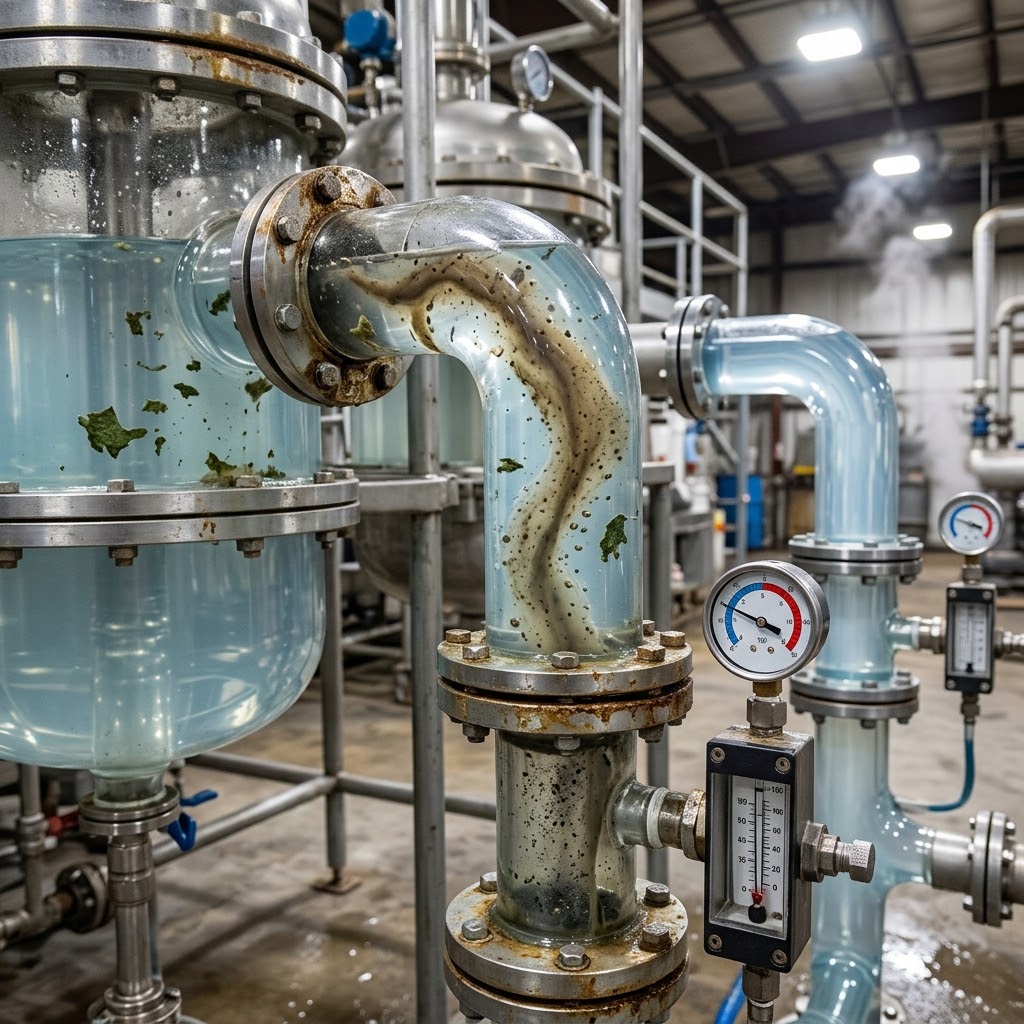
How Contamination Affects Process Performance
Internal buildup can restrict flow, increase differential pressure, block strainers, place additional demand on pumps, and allow debris to reach sensitive process equipment.
Facilities may also experience inconsistent throughput, recurring filter maintenance, suspended particles, or unstable system performance.
These warning signs do not always confirm that the pipeline requires cleaning. A system assessment can help distinguish between internal contamination, equipment faults, filtration problems, fluid chemistry concerns, control issues, and other possible causes.
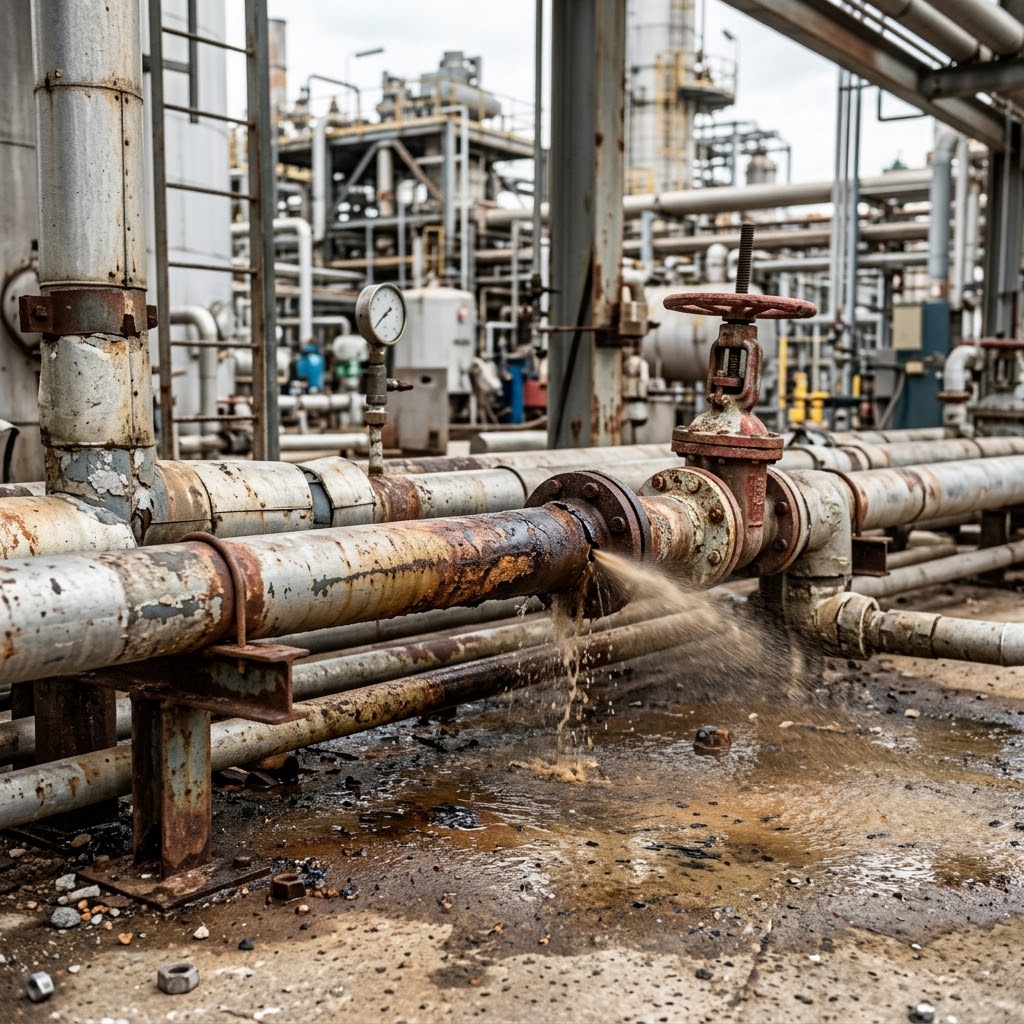
Benefits Of Ice Pigging For Industrial Process Pipelines
Ice pigging provides controlled physical cleaning without sending a rigid mechanical device through the process network.
Because the slurry is pumpable and deformable, it can move through many bends, fittings, valves, and changes in pipe diameter.
Potential advantages include:
Greater pipe-wall contact than water-only flushing
Removal of settled and accumulated material
Navigation through many complex pipeline features
Reduced reliance on repeated high-volume flushing
Controlled collection of discharged material
Lower risk of a permanently lodged cleaning device
Ice Pigging Applications Across The Process System Lifecycle
Pre-Commissioning Cleaning
Position ice pigging as a potential method for removing construction debris and residual material before suitable process piping enters service.
Planned Preventive Maintenance
Cover scheduled cleaning based on inspection results, fluid quality changes, flow restrictions, pressure changes, or known deposit accumulation.
Corrective Pipeline Cleaning
Address biofouling, sediment release, contamination events, poor circulation, recurring strainer blockage, or declining process performance.
Post-Modification And Expansion Cleaning
Ice pigging may also be considered after pipeline modifications, system expansions, equipment replacements, or changes to the process network.
Our Industrial Process Pipeline Cleaning Process
Each project is planned around system conditions, access requirements, contaminants, operating limits, and the available maintenance window.
- Feasibility Review
Assess system drawings, pipe dimensions, materials, fluids, valves, and fittings.
- Route And Isolation Planning
Define the cleaning route, isolation points, and project sequence.
- Access And Discharge Planning
Select injection, receiving, containment, and disposal arrangements.
- Site Preparation
Prepare temporary connections, equipment access, and required safety controls.
- Controlled Ice Slurry Injection
Inject the slurry while monitoring pressure, flow, and discharge conditions.
- Verification And Restoration
Evaluate removed material, confirm results, and return the system to service.
Frequently Asked Questions
What Is Industrial Process Pipeline Cleaning?
Can Ice Pigging Clean Process Water Pipes?
Does Ice Pigging Remove Biofilm?
Can Ice Pigging Be Used In Product Transfer Lines?
Does Ice Pigging Replace Chemical Water Treatment?
Discuss Your Industrial Process Pipeline System
Share your system drawings, process fluid, known deposits, and access points. Our specialists will assess whether ice pigging is suitable and recommend a project-specific approach.