
Food & Beverage Pipeline Cleaning With Ice Pigging
Remove product residue, biofilm, scale, and allergen cross-contact risks from suitable food and beverage processing pipelines with project-specific ice pigging.
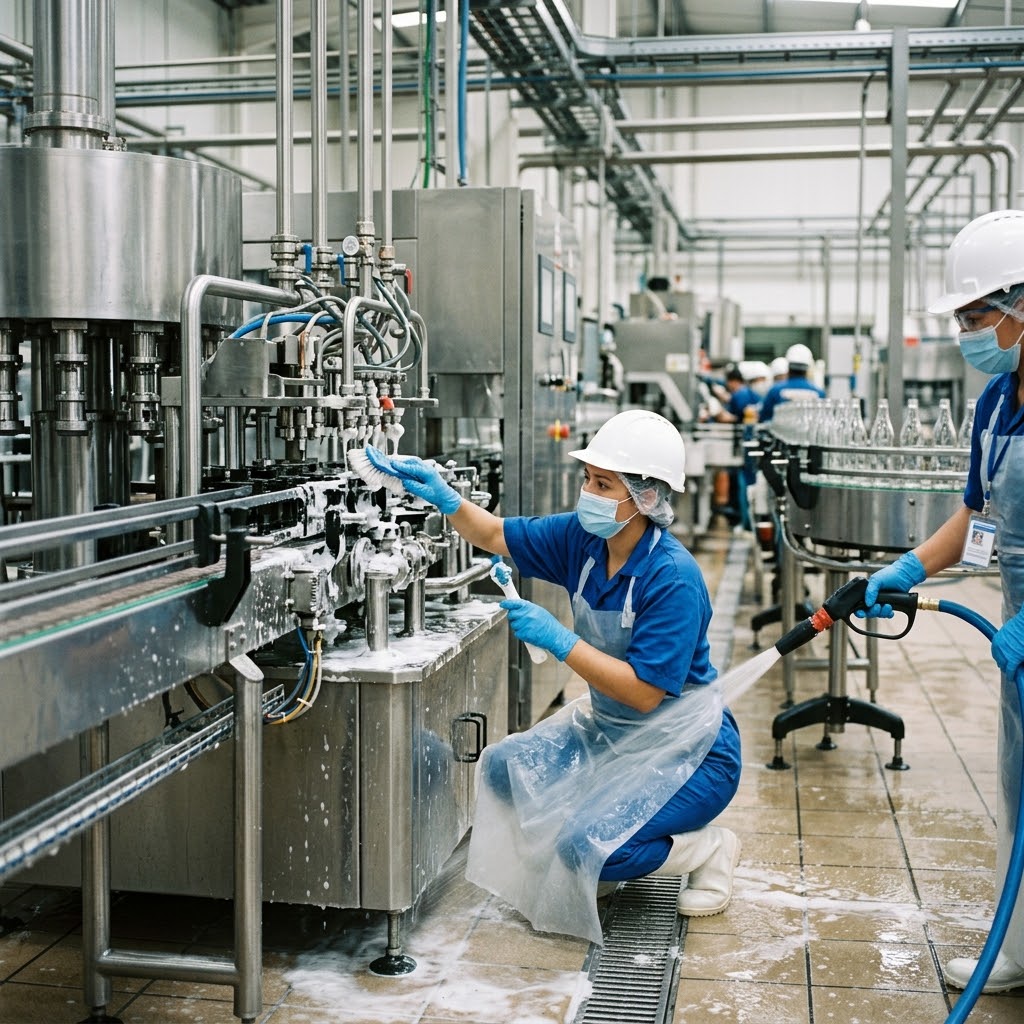
Specialized Cleaning For Food & Beverage Production Lines
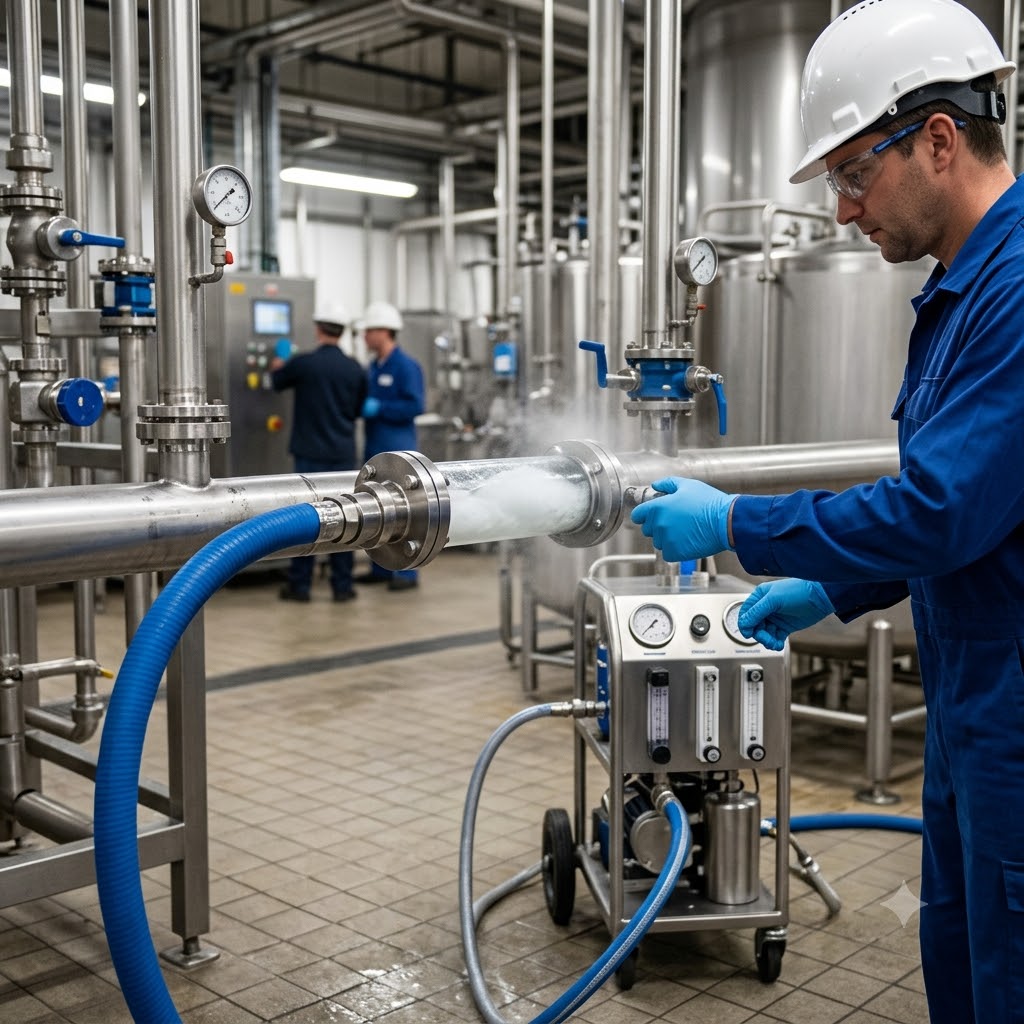
Ice pigging uses an engineered mixture of ice crystals and liquid to form a pumpable, semi-solid cleaning plug.
The slurry moves through a selected pipeline section, contacts the internal pipe surface, and carries loosened product residue, soil, and deposits toward a planned receiving point.
This physical cleaning method can complement CIP (clean-in-place) programs, sanitation protocols, and existing hygiene procedures.
It does not replace validated cleaning and sanitation programs, but it can remove residue that flushing, rinsing, or CIP cycles alone may not fully clear.
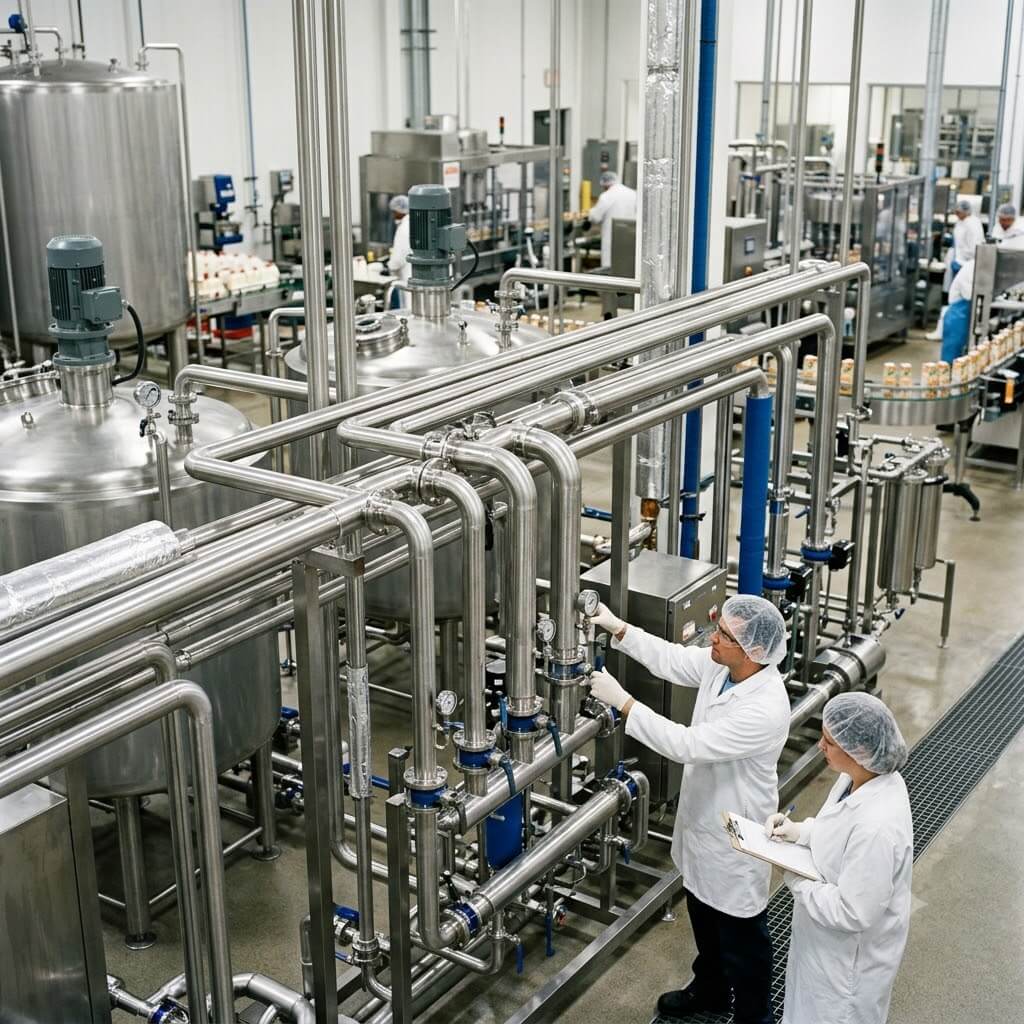
Food & Beverage Pipelines We Can Assess
Processing lines vary by facility and product type. We assess pipe size, layout, product composition, access points, isolation requirements, and cleaning objectives before recommending ice pigging.
Product Transfer Lines
Remove residual product, soil, and buildup from suitable transfer and process piping between vessels.
CIP Supply And Return Lines
Clear scale, product film, and deposits from compatible clean-in-place circuits.
Filling And Packaging Line Piping
Address product changeover residue in suitable lines feeding filling and packaging equipment.
Heat Exchanger And Pasteurizer Connecting Lines
Clean suitable supply and return pipework. Narrow-bore internal passages require separate assessment.
Allergen Changeover Lines
Support changeover cleaning between differing allergen or recipe runs on suitable shared pipelines.
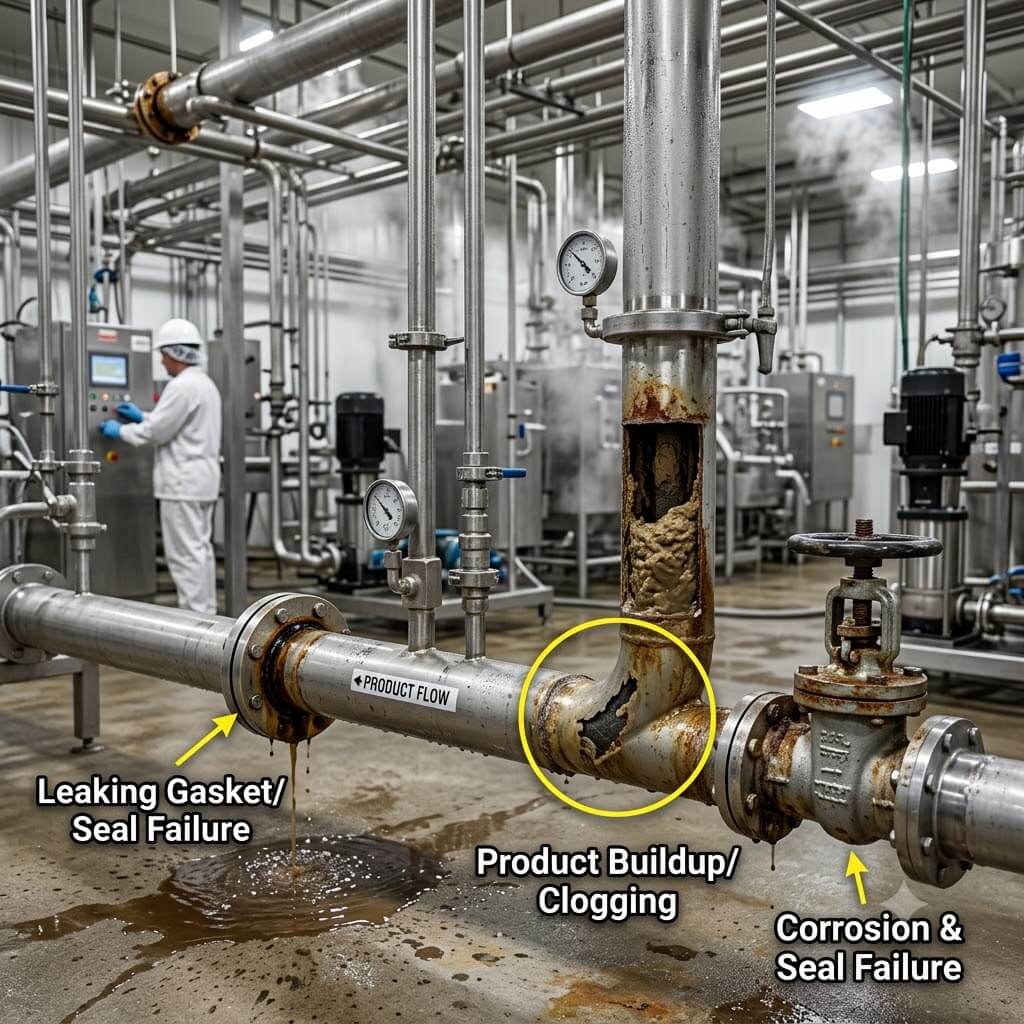
Common Food & Beverage Pipeline Problems
Processing pipelines can collect contaminants during production, changeovers, downtime, and low-flow periods. Ice pigging can remove several forms of buildup from suitable systems.
Product Residue And Biofilm
Sugars, proteins, fats, and other product components can leave residue that supports biofilm growth along internal pipe surfaces.
Scale And Mineral Deposits
Mineral buildup from process water and product chemistry can restrict flow and harbor bacteria in low-flow sections.
Allergen Cross-Contact Residue
Residual product from a previous run can remain in pipeline dead-legs and fittings between allergen changeovers.
Line Changeover Carryover
Flavor, color, and product carryover between batches can affect the next production run if pipelines are not adequately cleared.
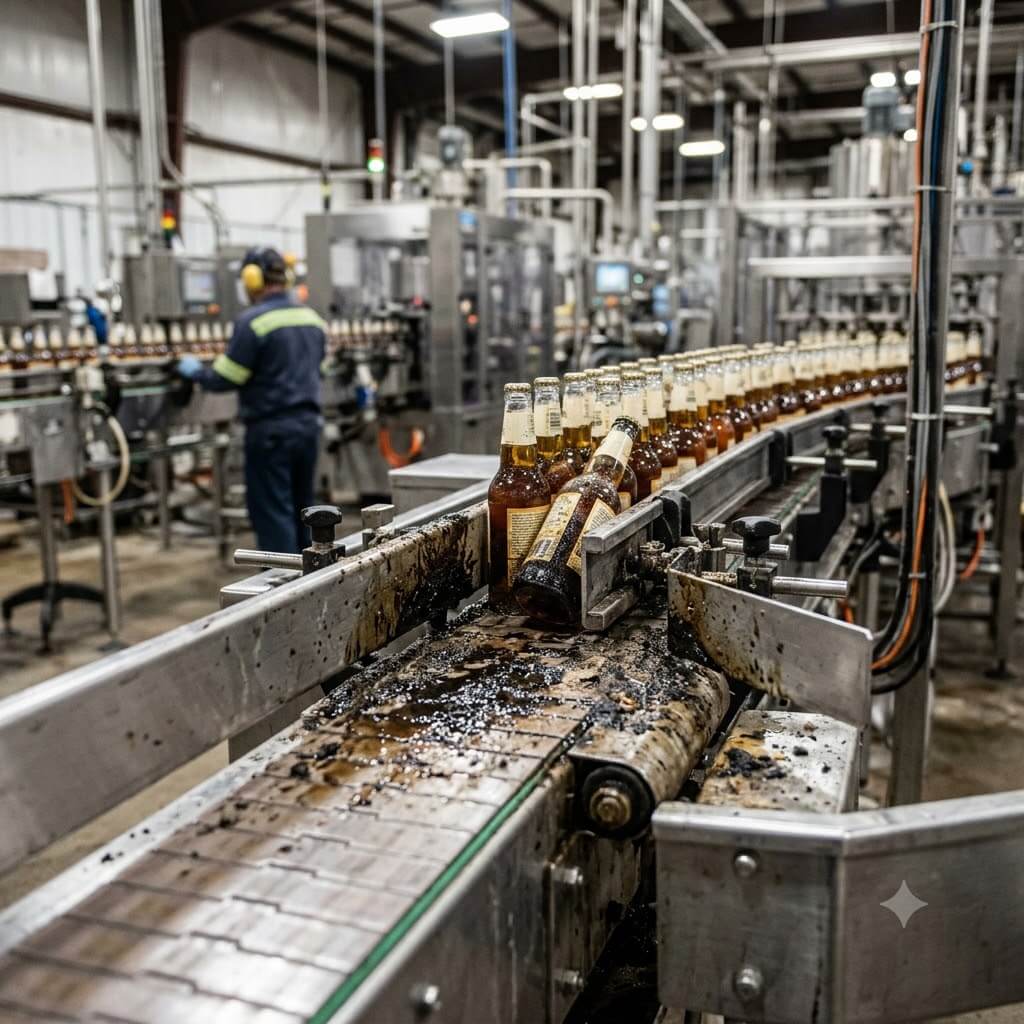
How Contamination Affects Production Line Performance
Internal buildup can restrict product flow, increase differential pressure, extend CIP cycle times, place additional demand on pumps, and increase the risk of contamination reaching finished product.
Facilities may also experience inconsistent batch quality, recurring filter or strainer maintenance, extended changeover times, or unplanned downtime.
These warning signs do not always confirm that a pipeline requires cleaning. A hygiene assessment can help distinguish between internal residue, equipment faults, CIP program gaps, water chemistry concerns, and other possible causes.
Benefits Of Ice Pigging For Food & Beverage Facilities
Ice pigging provides controlled physical cleaning without sending a rigid mechanical device through the production pipework.
Because the slurry is pumpable and deformable, it can move through many bends, fittings, valves, and changes in pipe diameter common in processing lines.
Potential advantages include:
Greater pipe-wall contact than water-only flushing
Removal of settled product residue and buildup
Navigation through many complex pipeline features
Reduced reliance on repeated high-volume flushing
Controlled collection of discharged material
Faster line clearance to support changeover schedules
Ice Pigging Applications Across The Production Lifecycle
Pre-Startup Line Cleaning
Position ice pigging as a potential method for removing construction and installation debris before suitable process piping enters service.
Scheduled Sanitation Support
Cover planned cleaning based on inspection results, product quality changes, flow restrictions, pressure changes, or known residue accumulation.
Allergen And Product Changeover Cleaning
Address residue clearance between differing allergen runs, recipes, or product changeovers on suitable shared pipelines.
Post-Modification And Line Expansion Cleaning
Ice pigging may also be considered after pipeline modifications, line expansions, equipment replacements, or changes to the production network.
Our Food & Beverage Ice Pigging Process
Each project is planned around system conditions, access requirements, product residues, hygiene standards, and the available production window.
- Feasibility Review
Assess system drawings, pipe dimensions, materials, products, valves, and fittings.
- Route And Isolation Planning
Define the cleaning route, isolation points, and project sequence.
- Access And Discharge Planning
Select injection, receiving, containment, and disposal arrangements.
- Site Preparation
Prepare temporary connections, equipment access, and required hygiene and safety controls.
- Controlled Ice Slurry Injection
Inject the slurry while monitoring pressure, flow, and discharge conditions.
- Verification And Restoration
Evaluate removed material, confirm results, and return the line to production.
Frequently Asked Questions
What Is Food & Beverage Pipeline Cleaning?
Can Ice Pigging Support Allergen Changeovers?
Does Ice Pigging Remove Biofilm From Process Lines?
Is Ice Pigging Compatible With CIP Systems?
Does Ice Pigging Replace CIP Or Sanitation Programs?
Discuss Your Food & Beverage Production Line
Share your line drawings, product types, known residue issues, and access points. Our specialists will assess whether ice pigging is suitable and recommend a project-specific approach.