
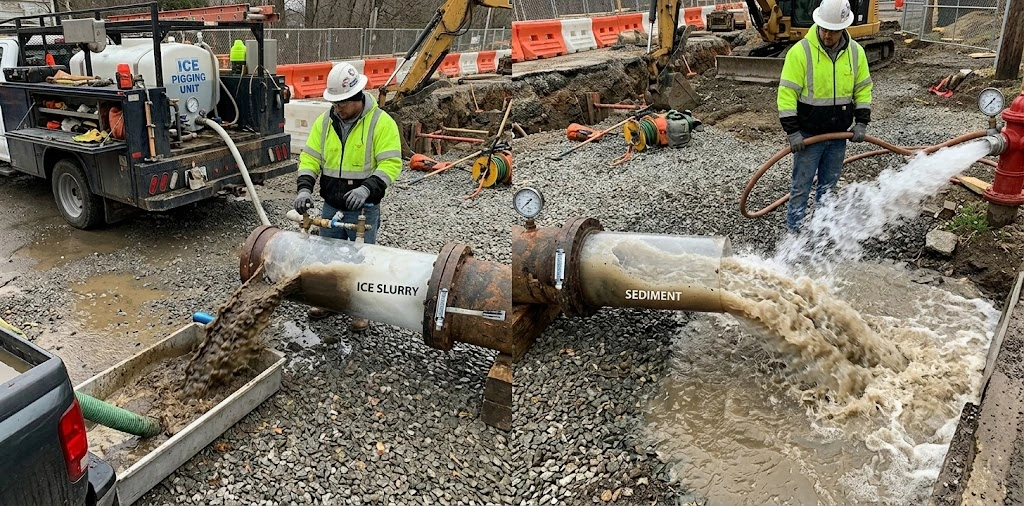
Pipeline cleaning is not optional. Every water main, sewer line, and industrial pipeline collects sediment, biofilm, and buildup over time. The question isn’t whether to clean it. It’s how.
Two methods dominate this conversation: water flushing and ice pigging. Both aim to clear the inside of a pipe, but they get there in very different ways, with very different results.
This guide breaks down what each method actually does, where they differ in cost and performance, and how to decide which one fits your pipeline. For a closer look at the technology itself, see what ice pigging is and how the process works.
What Is Water Flushing?
Water flushing is the traditional approach to pipeline cleaning. An operator opens a hydrant or valve and lets water run at high velocity, hoping the force is enough to dislodge loose sediment.
A more refined version, uni-directional flushing (UDF), isolates sections of the system and pushes water in one direction only. This raises velocity and improves results compared to standard flushing.
The Physics Working Against It
Water alone has low shear, meaning it doesn’t scrape the pipe wall very hard no matter how fast it moves. To compensate, operators need very high velocities, and even then results are inconsistent.
Consultants generally recommend flushing four to five times the pipe’s volume before results are considered acceptable. In a single mile of 8 inch water main, that adds up to close to 69,000 gallons of water for one cleaning cycle alone.
What Is Ice Pigging?
Ice pigging replaces plain water with a dense ice slurry. Injected into the pipeline through an existing access point, the slurry forms a semi solid mass that moves through the system under normal flow.
As it travels, the ice scours the entire circumference of the pipe wall, picking up biofilm, sediment, scale, and grease along the way. Because it conforms to the pipe’s shape, it maintains contact even through bends, valves, and diameter changes where a rigid pig might get stuck.
Unlike a solid pig, ice pigging carries a built in safety margin. If flow stops for any reason, the ice simply melts, removing the risk of a jammed line and a costly excavation. You can see the full method in our ice pigging process breakdown.
Ice Pigging vs Water Flushing: A Side by Side Look
The differences between these two methods show up clearly once you compare them across the metrics that matter most to a utility or plant manager.
Cleaning Power
Turning water into ice crystals generates shear on the pipe wall that is dramatically higher than plain water, even at slower velocities. That translates into a more complete clean, particularly for stubborn deposits like grease and biofilm that flushing tends to leave behind.
Water Usage
Flushing depends on volume. Ice pigging depends on contact. That difference alone can cut water consumption well below what a standard flushing program requires, which matters in regions facing drought restrictions or limited storage capacity.
Cost Per Foot vs Cost Per Pound
On a simple dollar per foot basis, flushing looks cheaper. Ice pigging typically runs higher upfront due to specialized equipment and expertise.
But cost per foot isn’t the full picture. When measured by cost per pound of sediment actually removed, ice pigging tends to come out ahead, sometimes by a wide margin, because it removes far more material in a single pass.
Downtime and Risk
Flushing requires long run times to reach adequate volume, tying up crews and water supply for hours. Ice pigging projects are typically completed faster, often within a single work window, with a lower risk of equipment becoming stuck inside the line.
When Water Flushing Still Makes Sense
Flushing isn’t obsolete. For light, routine maintenance on systems without significant buildup, it remains a reasonable, low cost option.
It also requires minimal specialized equipment, which makes it accessible for smaller utilities handling straightforward maintenance schedules.
When Ice Pigging Is the Better Choice
Ice pigging earns its place when the problem goes beyond routine upkeep. A few situations where it consistently outperforms flushing:
- Persistent discolored water complaints tied to biofilm, iron, or manganese buildup
- Grease or product residue that flushing can’t fully clear
- Drought restricted areas where water conservation is a priority
- Potable water systems that need a chemical free cleaning method
These are the same conditions we walk through during a feasibility review, where pipe diameter, access points, and buildup type determine whether ice pigging is the right fit. See more on applications across sectors.
Limitations Worth Knowing
Ice pigging is not universal. It isn’t suited for gravity fed sewers, since the process depends on pumped flow to move the slurry through the line.
It also has limits against very hard, encrusted scale or heavy corrosion buildup that has calcified over years. In those cases, mechanical pigging or another rehabilitation method may be a better starting point.
Understanding these boundaries upfront avoids wasted time and sets realistic expectations for what a single cleaning pass can achieve. Our benefits overview covers where the method performs best.
How We Approach Every Ice Pigging Project
Every pipeline is different, so every project starts with a site review. Diameter, material, route, access points, and pressure conditions all factor into whether ice pigging is a practical fit before any slurry is injected.
From there, the plan is built around the actual buildup type and discharge requirements, not a generic template. Results are documented with samples and observations, so the cleaning outcome is measurable rather than assumed.
FAQs
Is ice pigging more expensive than flushing?
Upfront cost per foot can run higher for ice pigging. But measured by sediment removed per dollar, it’s often more economical, especially for pipelines with heavy buildup.
How much water does ice pigging save compared to flushing?
Ice pigging typically uses a fraction of the volume required for a comparable flushing program, since it depends on contact and scouring rather than sheer volume.
Can ice pigging remove biofilm and grease better than flushing?
Yes. The ice slurry maintains full contact with the pipe wall, making it more effective against biofilm, grease, and sediment that flushing often leaves behind.
Is ice pigging safe for drinking water systems?
It can be, when properly planned, handled, and verified under applicable water system requirements. The slurry itself is plain water, with no added chemicals.
When should you use water flushing instead of ice pigging?
Flushing remains a reasonable option for light, routine maintenance on systems without significant buildup or complex access challenges.
Does ice pigging work on wastewater and sewer lines?
It can, provided the line is pumped rather than gravity fed. Gravity sewers rely on a different flow mechanism that isn’t compatible with the process.
Which Method Fits Your Pipeline?
Every system carries its own mix of pipe material, buildup, and access constraints. The right cleaning method depends on those specifics, not a blanket rule.
Share your pipe diameter, length, and buildup type, and we will help determine whether ice pigging is a practical fit for your project. Request a feasibility review to get started.