
- The process, end to end
How The Ice Pigging Process Works
Ice pigging uses dense ice slurry to clean the inside of pipelines, starting with a pipeline review and moving through site setup, slurry injection, controlled cleaning, discharge handling, and final verification, with each project planned around pipe size, length, access points, pressure, buildup type, and discharge requirements.
- The four phases
One Method With Four Clear Checkpoints
Every ice pigging project follows a planned sequence, from pipeline review to discharge handling and final reporting.
01
Pipeline Review
Confirm pipe size, route, access points, pressure, and buildup type.
02
Site Setup
Prepare entry points, exit points, equipment, safety controls, and discharge planning.
03
Injection And Cleaning
Introduce the ice slurry and move it through the pipe under controlled flow.
04
Discharge And Verification
Collect removed material, flush the line, and document the results.
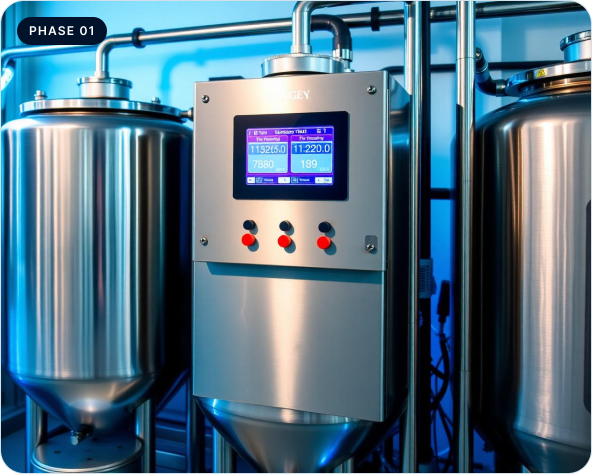
- Phase 01 — Feasibility
We Confirm Whether Ice Pigging Fits The Pipeline
Before work begins, the pipeline is reviewed to confirm whether ice pigging is a practical cleaning option. This includes the pipe layout, material, diameter, length, fittings, valves, pressure conditions, access points, and cleaning goal.
The purpose of this phase is to identify the right approach before equipment arrives on site.
Pipe Data Review
Review diameter, length, material, route, valves, fittings, and known restrictions.
Access Planning
Identify suitable entry and exit points for slurry injection and discharge.
Cleaning Goal
Define the buildup, flow issue, water quality concern, or residue problem.
Feasibility Summary
Confirm scope, project needs, possible limits, and next steps.
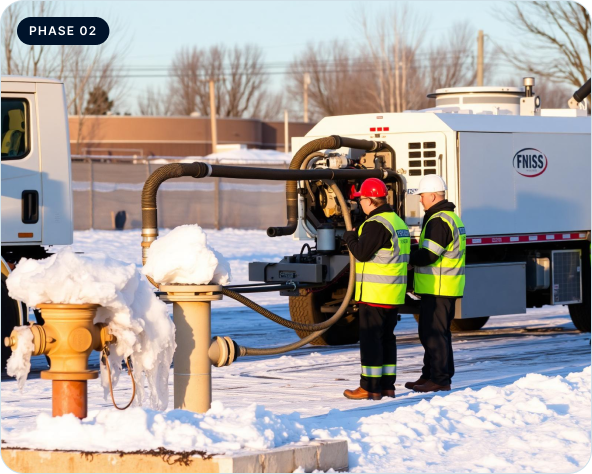
- Phase 02 — Mobilisation
Equipment, Access, And Discharge Are Prepared Before Injection
Once the project is approved, the site is prepared for safe and controlled cleaning. Equipment is staged, access points are checked, feed water is confirmed, and the discharge plan is reviewed.
This phase helps make sure the cleaning run can be completed with the right flow control, safety setup, and outlet management.
Equipment Setup
Prepare the ice slurry equipment, hoses, connections, and work area.
Feed Water Source
Confirm a suitable water source for slurry preparation and flushing.
Discharge Point
Plan where the slurry and removed material will exit the system.
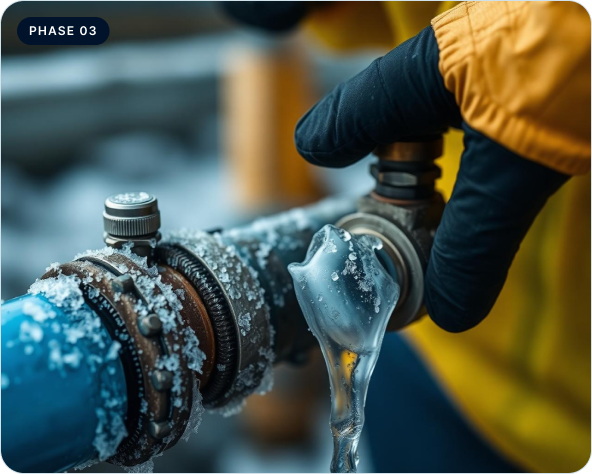
- Phase 03 — Injection & Clean
The Ice Slurry Moves Through The Pipe As A Soft Cleaning Plug
The ice slurry is introduced through a suitable access point and moved through the pipeline under controlled flow. As it travels, the slurry contacts the pipe wall and helps loosen sediment, biofilm, grease, scale, and residue.
The cleaning run is monitored so the process can be adjusted based on pipe conditions and project needs.
Controlled Injection
Introduce the slurry through the planned hydrant, valve, fitting, or access point.
Flow Monitoring
Track pressure, flow, and movement during the cleaning run.
Wall Contact
The slurry helps remove buildup from the inside surface of the pipe.
Lower Stuck-Pig Risk
If movement stops, ice can melt instead of remaining as a rigid blockage.
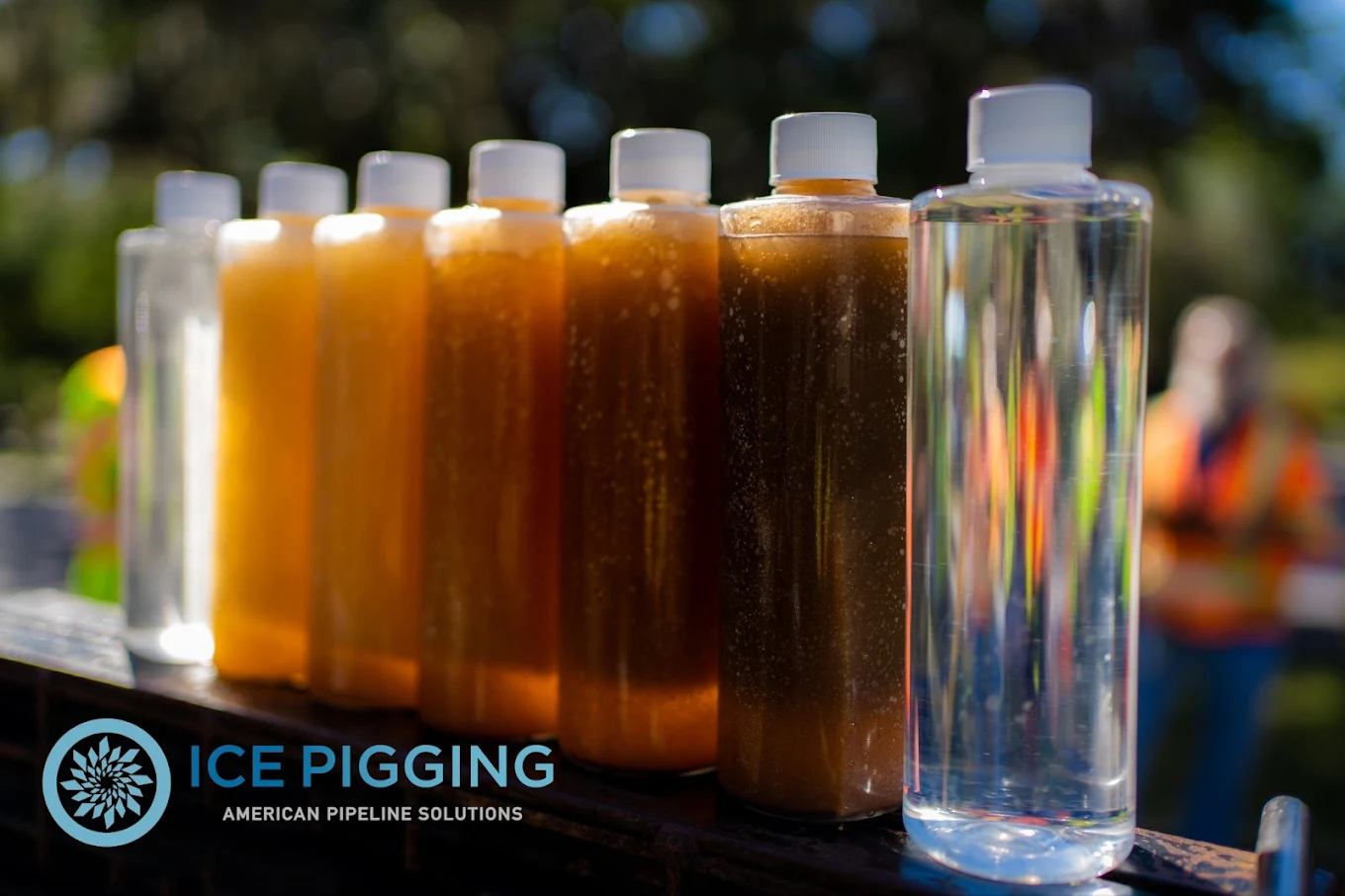
- Phase 04 — Discharge & Validation
Removed Material Is Captured, Reviewed, And Documented
As the slurry reaches the outlet, it carries loosened material out of the pipeline. The discharge is collected or routed based on the project plan and local requirements.
After the cleaning run, the line is flushed as needed, observations are reviewed, and completion notes are prepared.
Controlled Discharge
Collect or route discharge at the planned outlet point.
Final Flush
Clear remaining ice, salt, and loosened material from the line.
Field Review
Review discharge condition, removed material, and cleaning observations.
- TYPICAL PROJECT FLOW
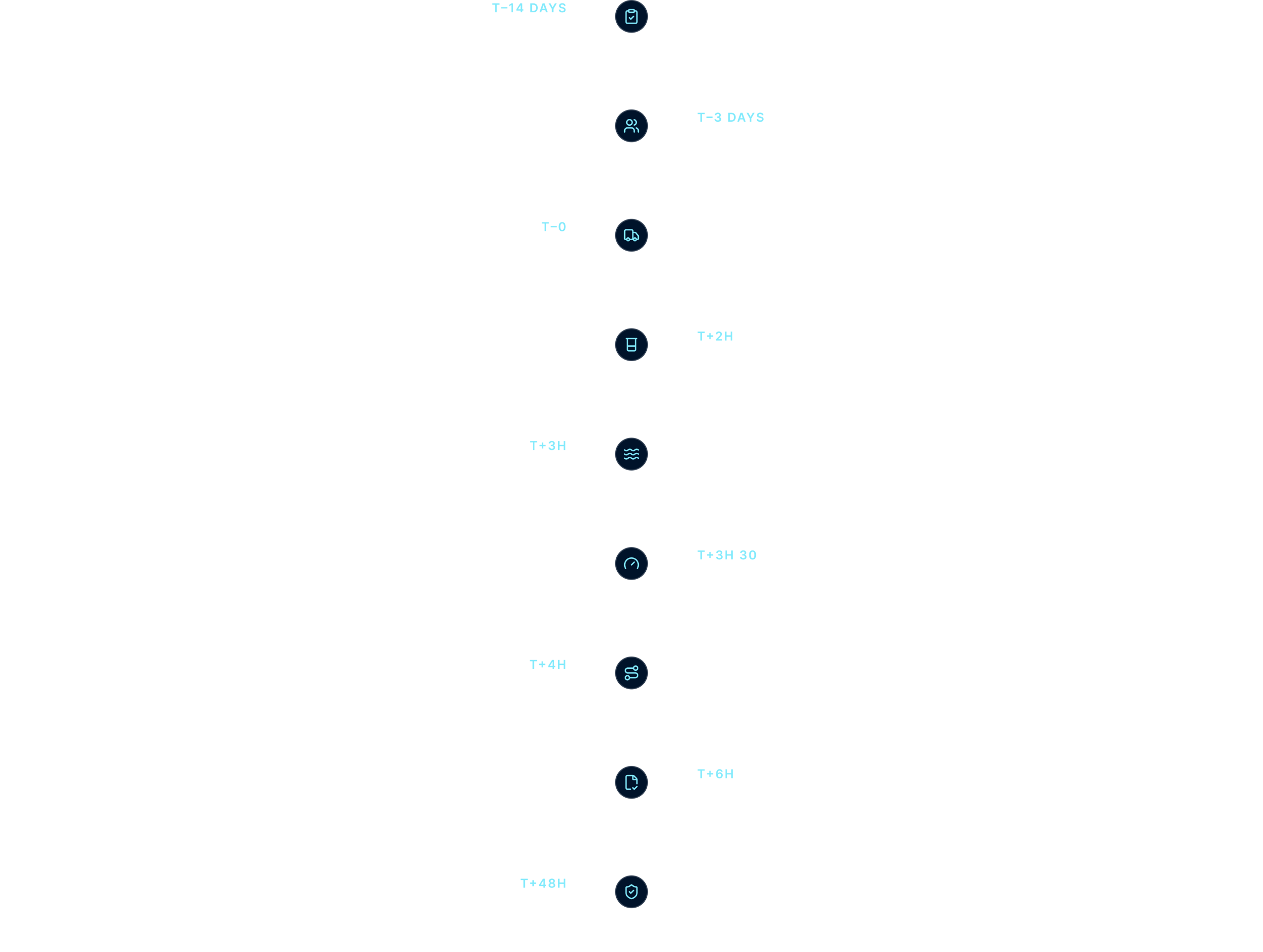
Most Projects Follow A Clear Work Sequence
Project timing depends on pipe size, length, access, buildup type, discharge handling, and site conditions. Some projects can fit within a short planned work window, while larger or more complex systems may require staged cleaning.
- Safety & quality
Built Around Control, Monitoring, And Documentation
Ice pigging is planned around the actual pipeline and site conditions. The process considers access, pressure, discharge, system operation, safety rules, and the cleaning objective before the run begins.
Site Safety
Work is planned around site access, operating conditions, and safety requirements.
Pressure Awareness
Flow and pressure are reviewed during setup and cleaning.
Discharge Control
Removed material is handled based on project and local requirements.
Documentation
Field notes and observations support the final project record.
- Process FAQs
Ask Before Scheduling Ice Pigging
How Long Does The Ice Pigging Process Take
What Do You Need Before The Job Starts
Does The Pipeline Need To Be Shut Down
How Is The Ice Slurry Injected
What Happens During The Cleaning Run
Ready To Plan An Ice Pigging Project
Send us your pipe size, length, material, location, access points, and buildup type. We’ll review the details and help determine whether ice pigging is a practical fit.